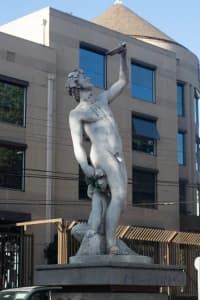
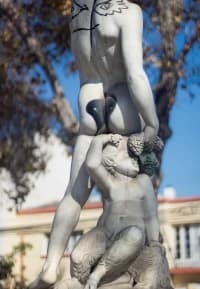
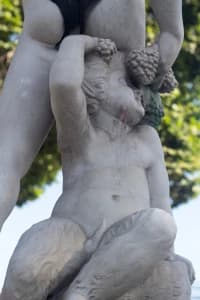
Bacchus – Sculpture in La Serena


Work
Bacchus
Author
Unknown (replica)
Year
20th Century [Estimated]
Work narrative
History
Bacchus (Dionysus in Greek) is the god of wine, the vine, ecstasy and theater.
Son of Jupiter and the mortal Semele, he was born twice: first from his mother's womb, who died upon seeing Jupiter's true divine form, and then from his father's thigh, where he was gestated anew.
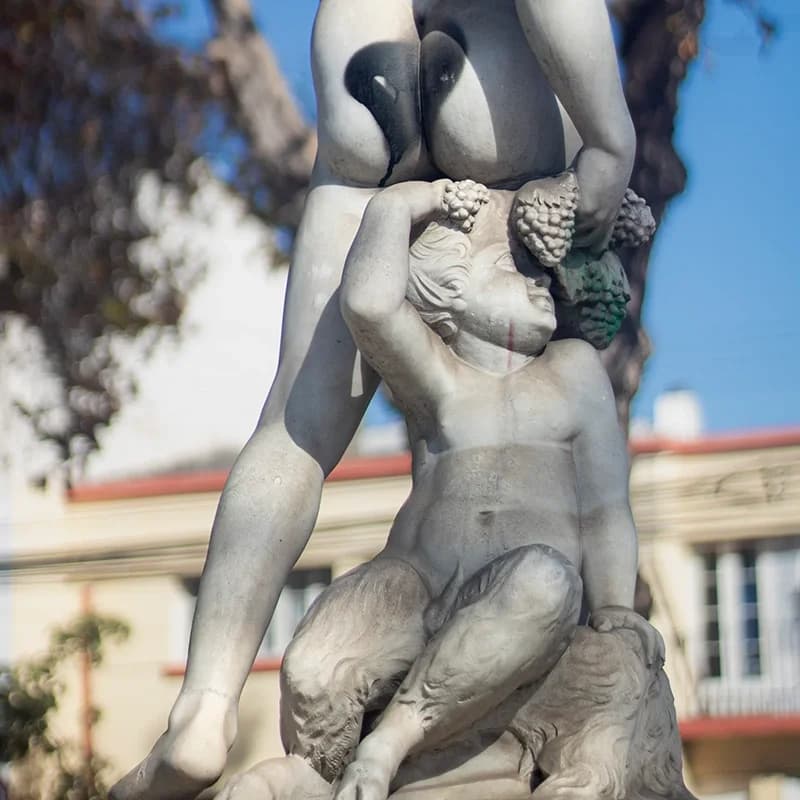
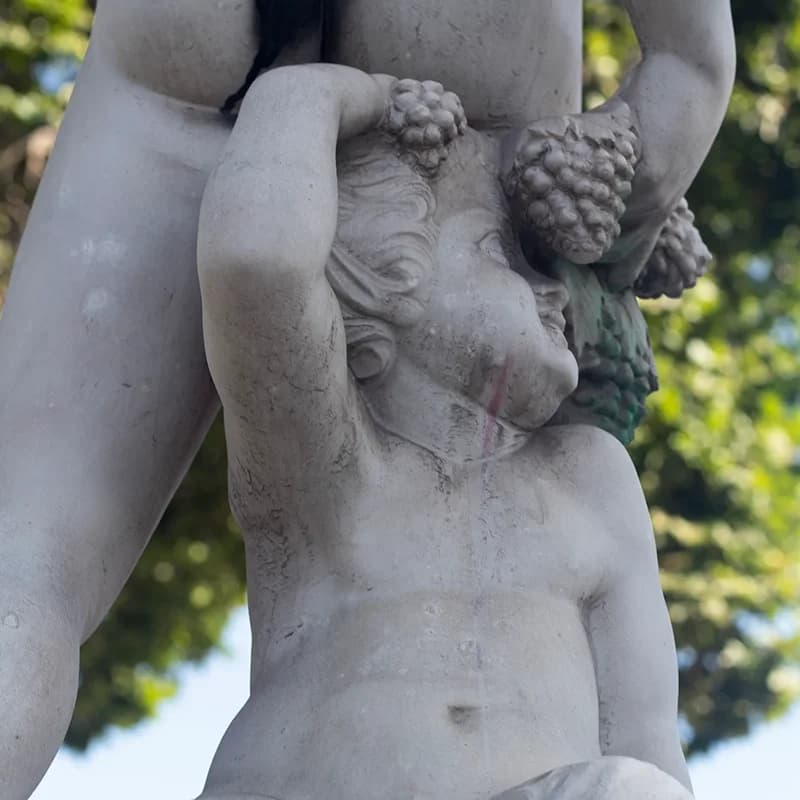
Raised by nymphs and satyrs, he learned the secrets of the vine.
His cult, associated with the liberation of inhibitions through wine, included orgiastic rituals (the bacchanals) and theatrical performances.
Bacchus symbolizes the life–death–rebirth cycle (like the vine, which is pruned and reborn), and his myth explores dualities: joy and madness, civilization and wild nature.
In Renaissance art (as in Sansovino's sculpture), he is represented as young and androgynous, with grapes or a cup,
evoking both pleasure and the fleeting nature of life (*carpe diem*).
Work record
Technical Data
AUTHOR
Unknown (replica)
CHRONOLOGY
20th Century [Estimated]
MATERIALITY
White Carrara statuary marble.
TECHNIQUE
Marble carving
MOVEMENT
Renaissance

WORK DESCRIPTION
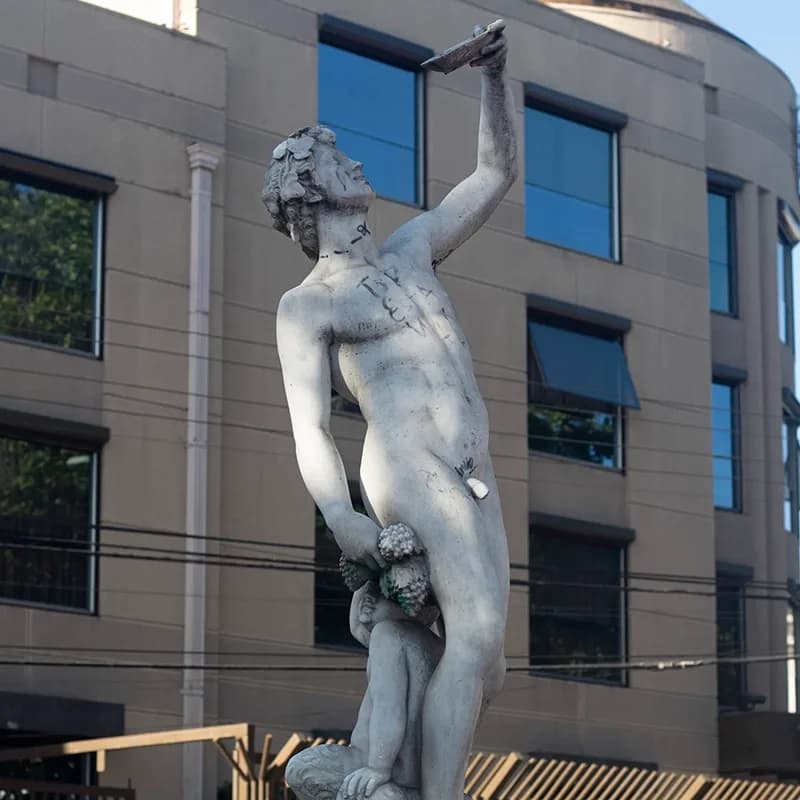
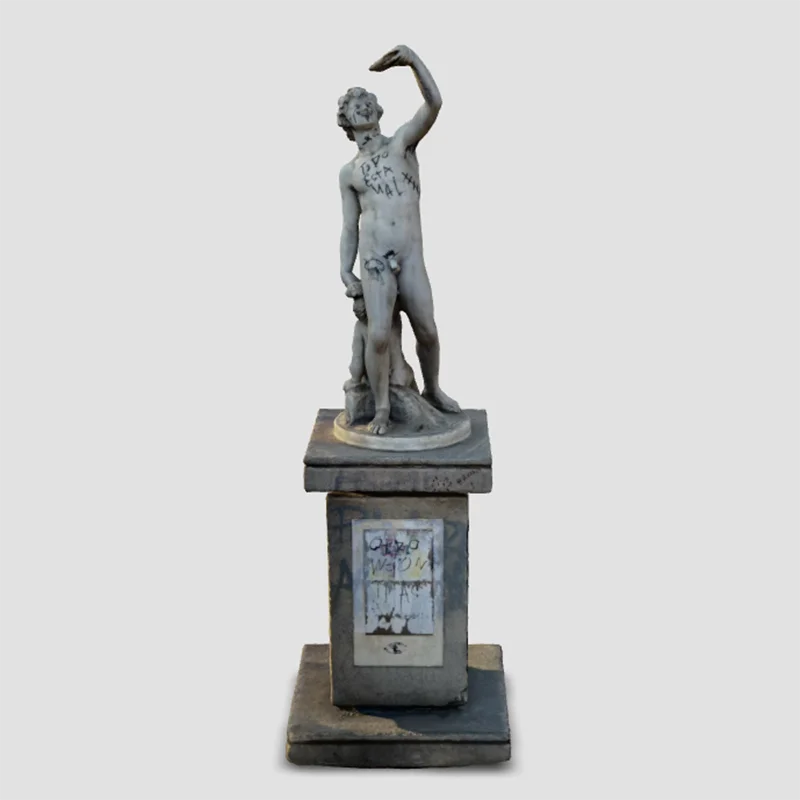
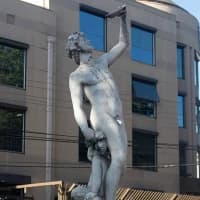
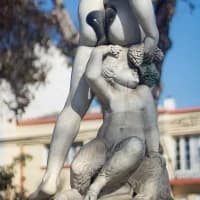
Nude youth with classical proportions, in a slight *contrapposto* posture.
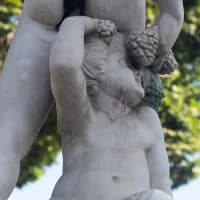
Drunken and smiling face, crowned with ivy. Curly hair, relaxed but muscular body. Holds a wine cup and grape clusters.
Panther skin over the shoulder. Expression of jovial intoxication, with half-closed eyes.
Influenced by classical Antiquity, it mixes idealism and vitality, typical Renaissance features.
Represents the exaltation of nature and pleasure, within the humanist context of the era.
General Gallery