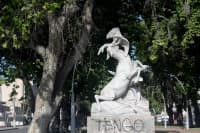
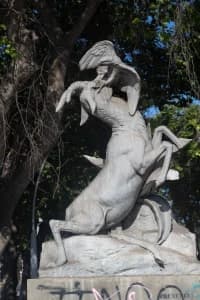
Eagle and Goat – Sculpture in La Serena



Work
Eagle and Goat
Author
Georges Gardet
Year
19th Century

Work narrative
History
The work arrived in the city within the framework of the Plan Serena, during the administration of President Gabriel González Videla. Unlike the Greco-Roman Carrara marble replicas imported from Italy, this piece reflects the taste for the French Animalier genre of sculpture, common in parks and public promenades of the late 19th century. It was installed as part of the "Open-Air Museum" of Avenida Francisco de Aguirre to embellish the boulevard with scenes of wild nature, departing from purely mythological canons to focus on raw power and realism.
Work record
Technical Data
AUTHOR
Georges Gardet
CHRONOLOGY
19th Century
MATERIALITY
Stone
TECHNIQUE
Stone carving
MOVEMENT
Academic Realism

WORK DESCRIPTION
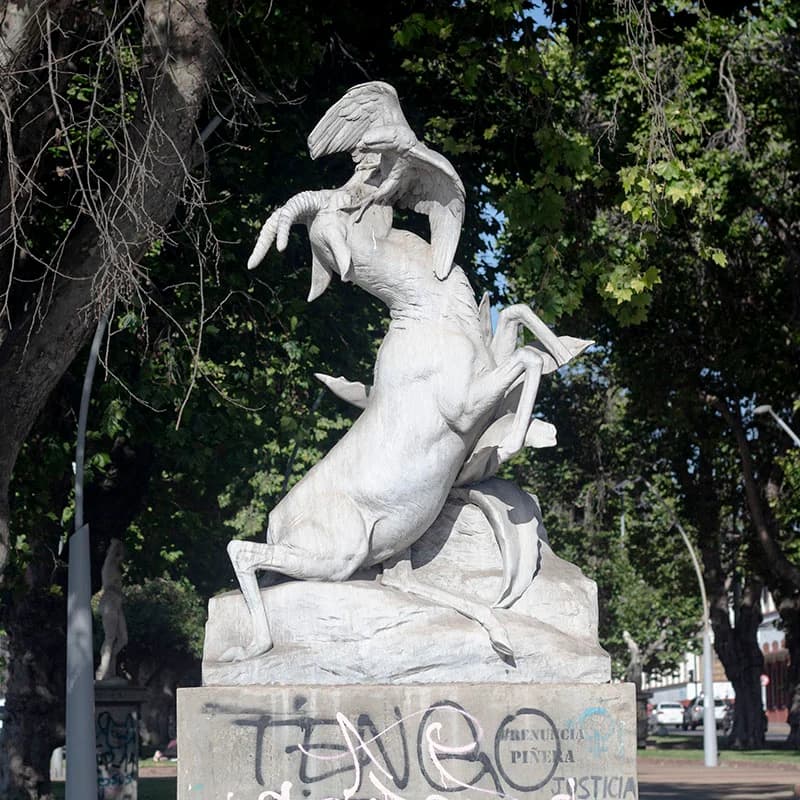
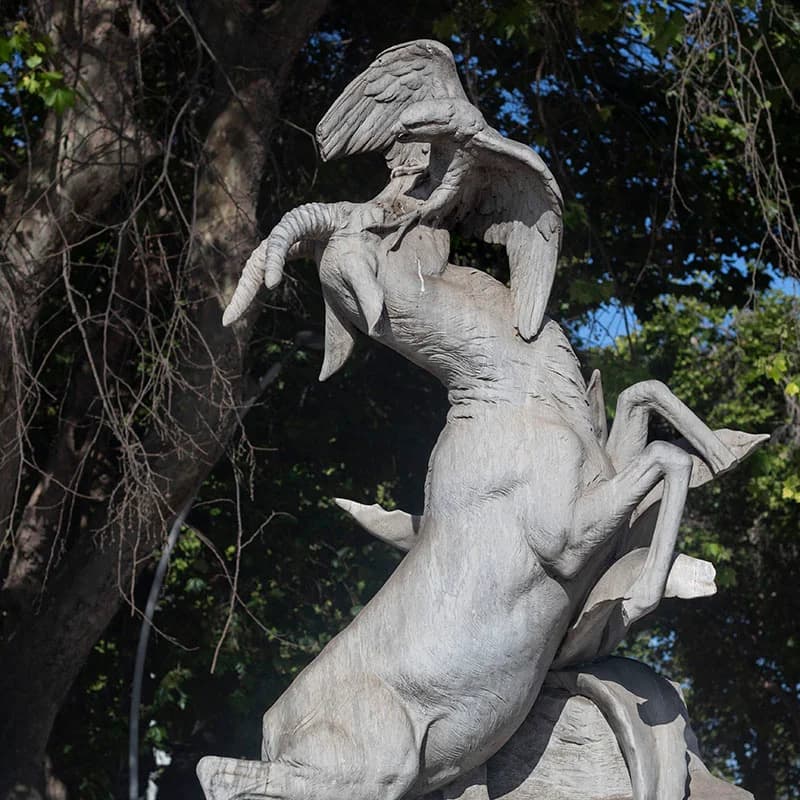
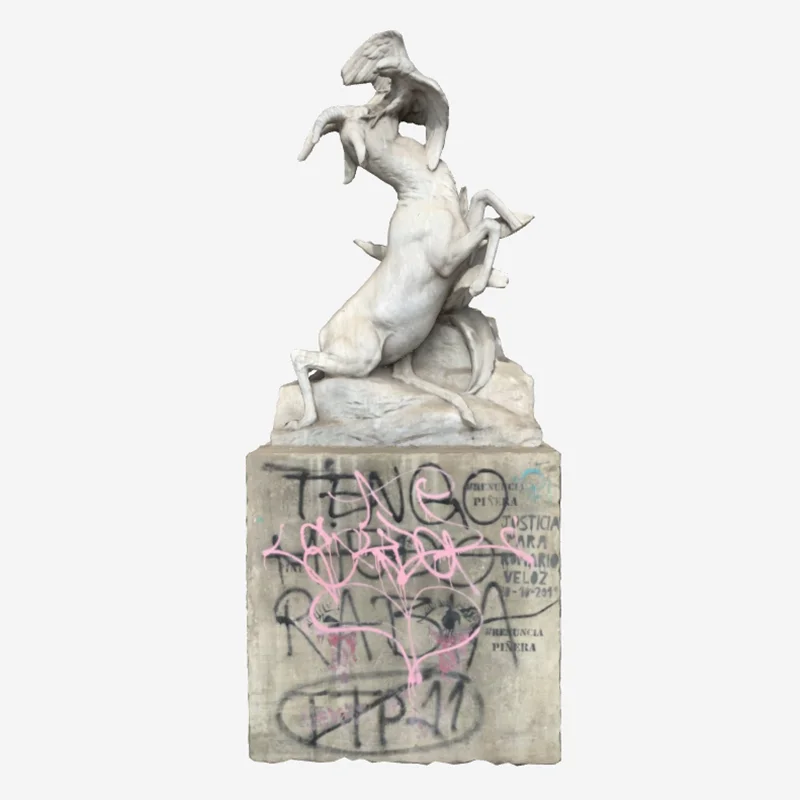
The sculpture captures a moment of high dramatic tension: a large-span eagle has descended upon a he-goat, sinking its talons into the animal's back and flank. The composition is pyramidal and dynamic; the goat appears contorted, its hind legs buckling under the weight and the attack, while its head turns in a gesture of pain or final resistance. The eagle, with its wings partially unfolded, dominates the scene from above, symbolizing the predator's supremacy. The detail in the plumage and the goat's fur reinforces the naturalistic character of the work.
General Gallery