
Laurel Leaf – Sculpture in La Serena


Work
Laurel Leaf
Author
Virginio Arias
Year
1888


Work narrative
History
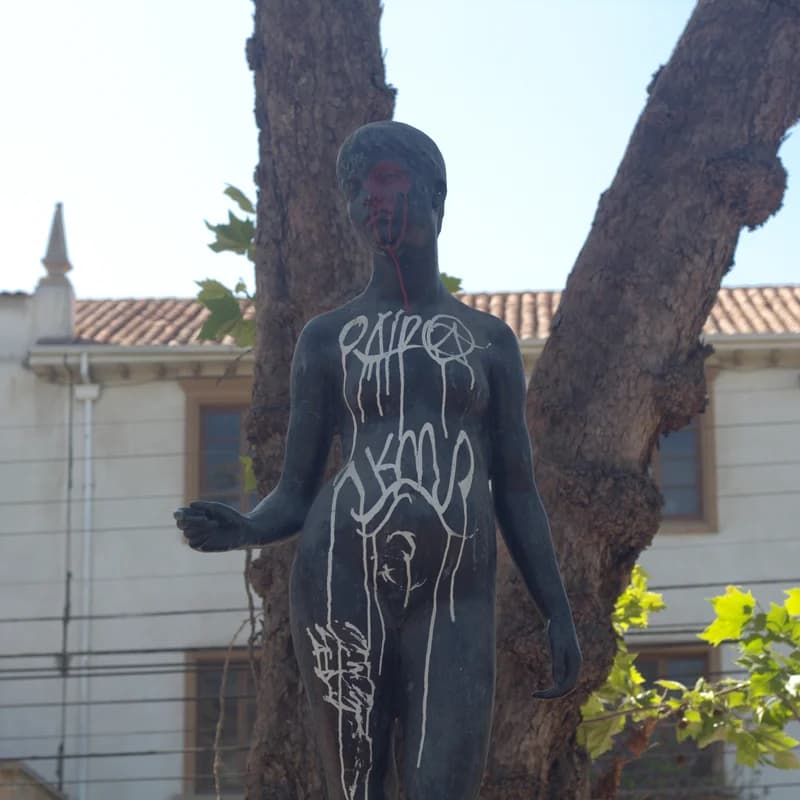
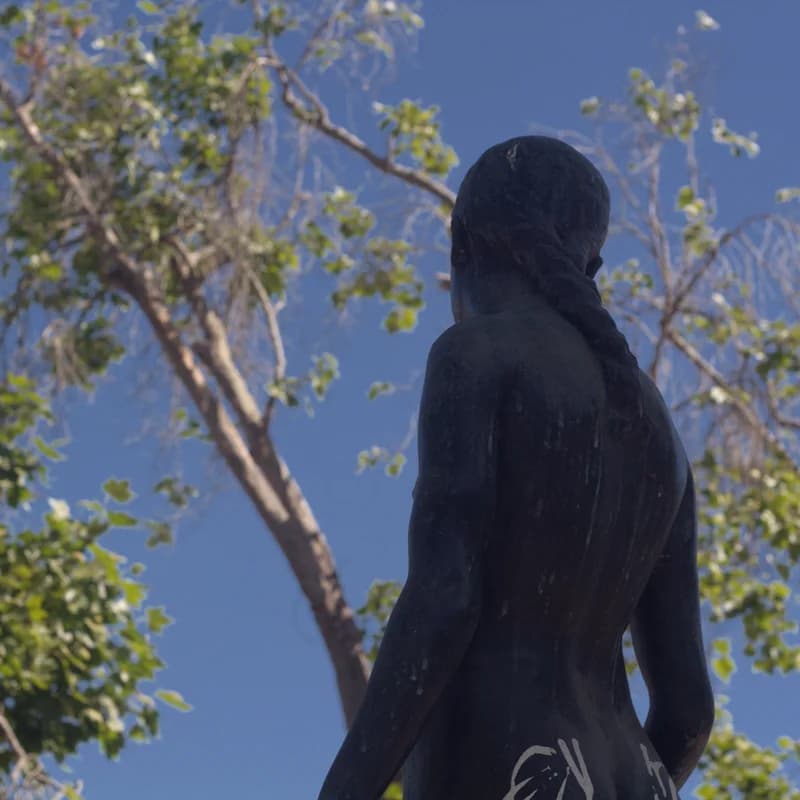
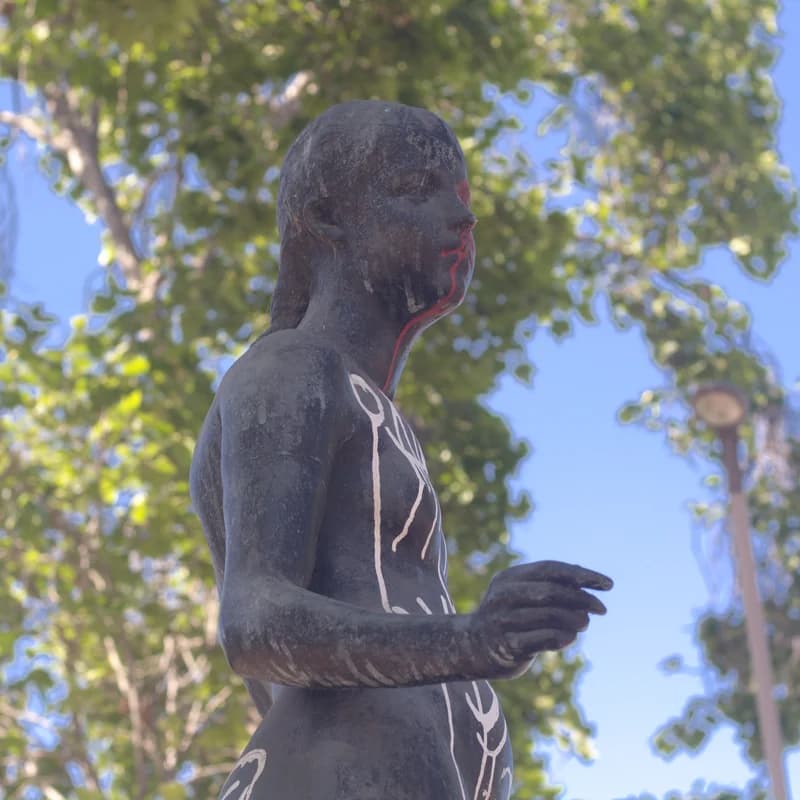
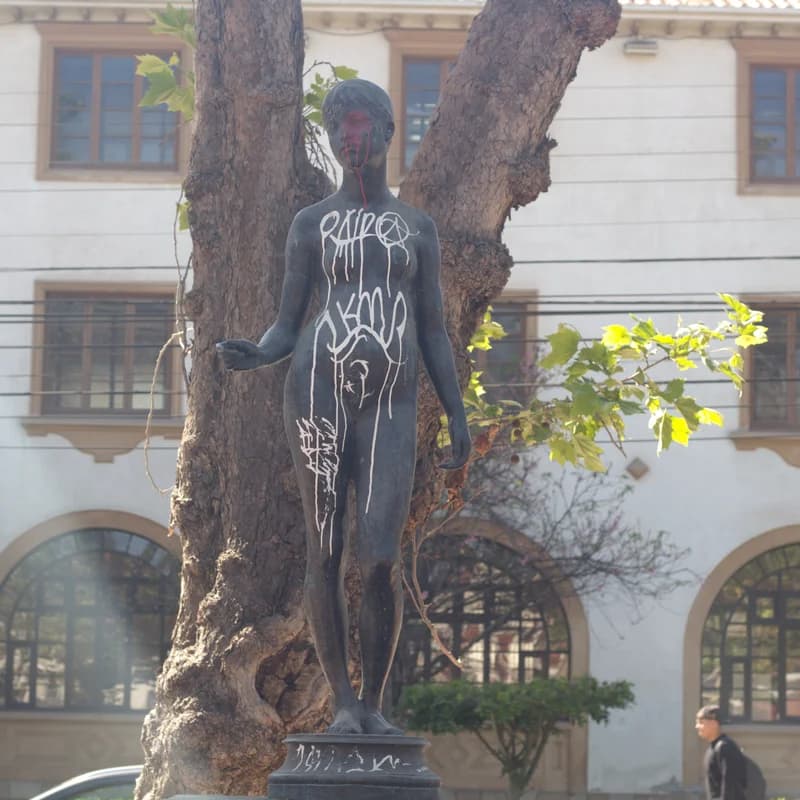
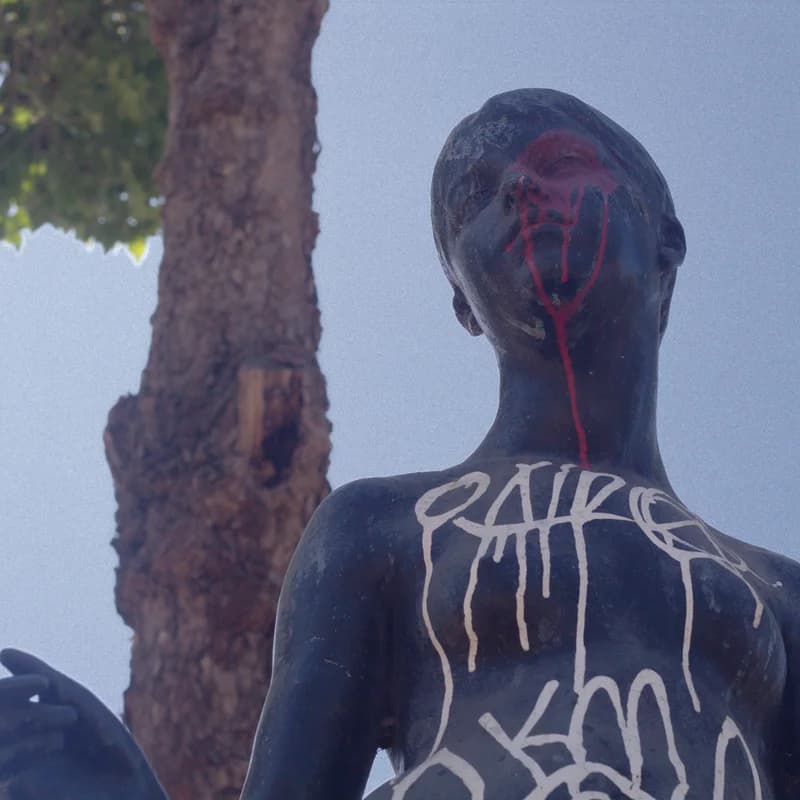
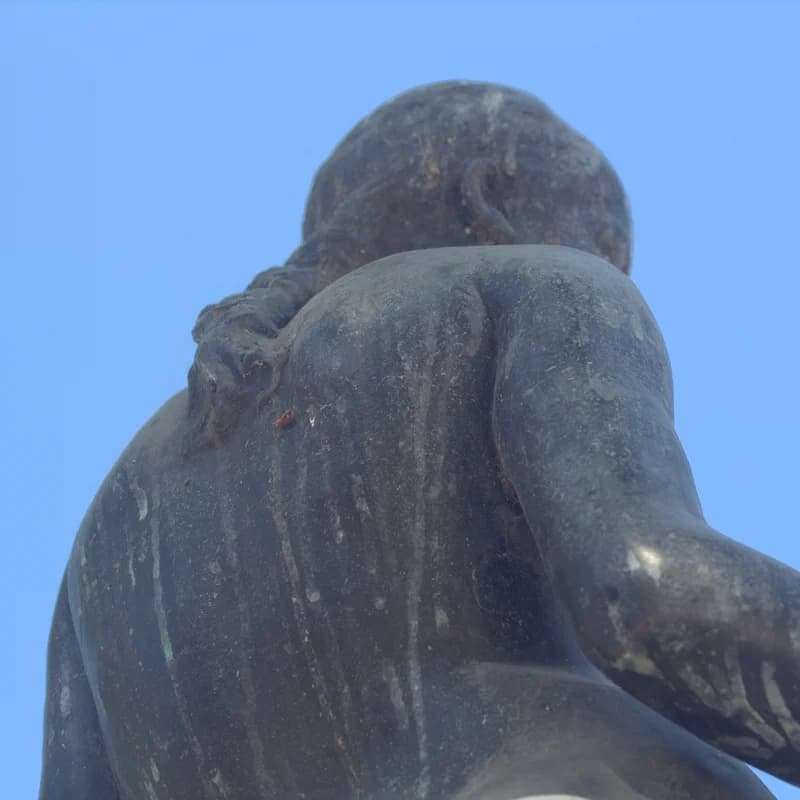
The sculpture shows a young, nude woman standing with her head slightly bowed and a braid falling down her back. Her right arm reaches forward with the hand open, and her left hangs beside her body. The title refers to the laurel, but no leaf, branch or crown can be made out on the figure.
The Museo Nacional de Bellas Artes links the composition to the myth of Apollo and Daphne. In Ovid’s *Metamorphoses*, Apollo pursues the nymph Daphne, who begs her father, the river god Peneus, for help and turns into a laurel; Apollo then adopts the tree as his emblem. No statement by Arias is known about the moment of the myth he meant to show, and the figure displays no plant transformation: this is an institutional reading, not an iconographic certainty.
*Hoja de Laurel* began as a plaster that Virginio Arias created in 1888 and sent to the Museo Nacional de Bellas Artes as a pensioner. The museum received it in 1889 and was already recording it under this title in 1896. During the 1930s moulds were taken to produce copies for schools, stadiums and other institutions, and in 1953 the Escuela de Artes Aplicadas cast a bronze for the museum that the museum itself catalogues as a reproduction of the original plaster.
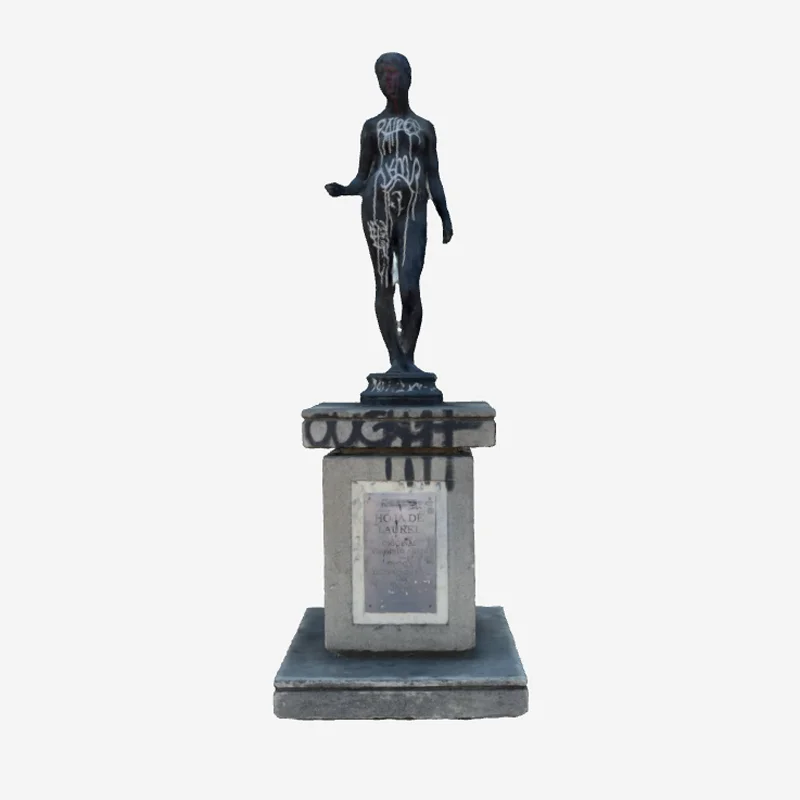
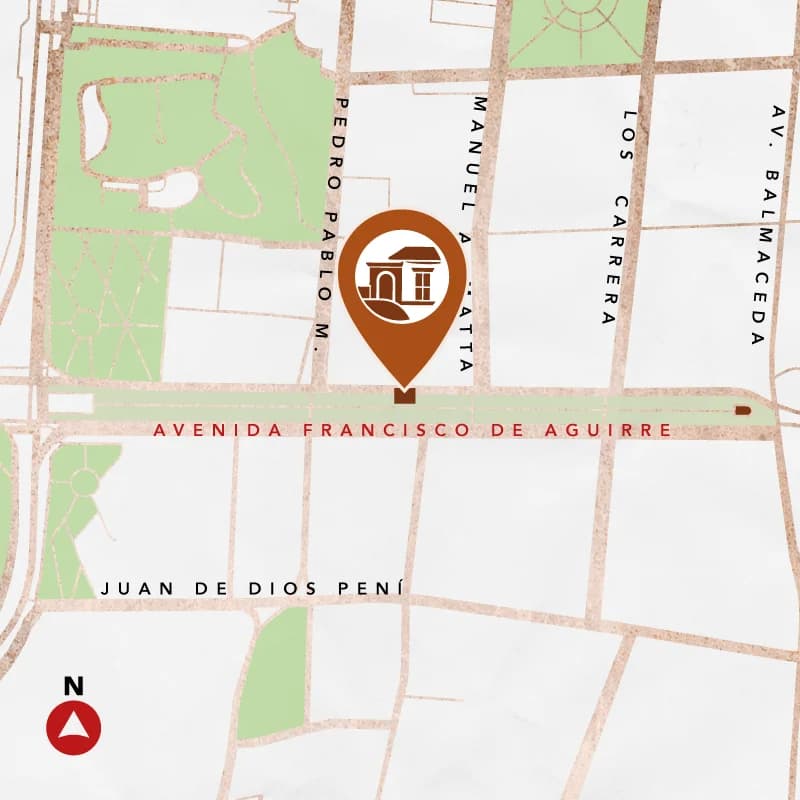
The La Serena bronze reproduces that same composition. Gabriel González Videla records it as “Hoja de Laurel — Bronce. Original de Virginio Arias” (Laurel Leaf, bronze, original by Virginio Arias), and the current plaque presents it as “Original Virginio Arias, época desconocida” (original by Virginio Arias, period unknown). The word “original” identifies the composition, but it does not show that this is the first casting or a cast made by Arias himself, since the historical original was in plaster. The founder, the workshop and the casting date are undocumented, as are the date it arrived and the date it was installed on the avenue.
Work record
Technical Data
AUTHOR
Virginio Arias (composition); founder of the La Serena bronze undocumented
CHRONOLOGY
Bronze of undocumented casting date; original plaster composition of 1888
MATERIALITY
Bronze
TECHNIQUE
Bronze casting
MOVEMENT
Classicist academicism (Greco-Roman tradition)
WORK DESCRIPTION
Young, nude female figure standing, slender in proportion with naturalistic modelling. The head is slightly bowed; the hair fits close to the head and is gathered into a long braid that falls down the back. The right arm moves away from the body, bends at the elbow and extends the forearm forward, with the hand open and the fingers slightly curved. The left arm hangs at the side. The legs stay together.
The figure stands on a moulded circular plinth that rests on a pedestal with a square base. No laurel leaf, branch or crown can be made out.
General Gallery


