Visitation – Sculpture in La Serena
Work
Visitation
Author
Lily Garafulic
Year
1947 or earlier
Work narrative
History
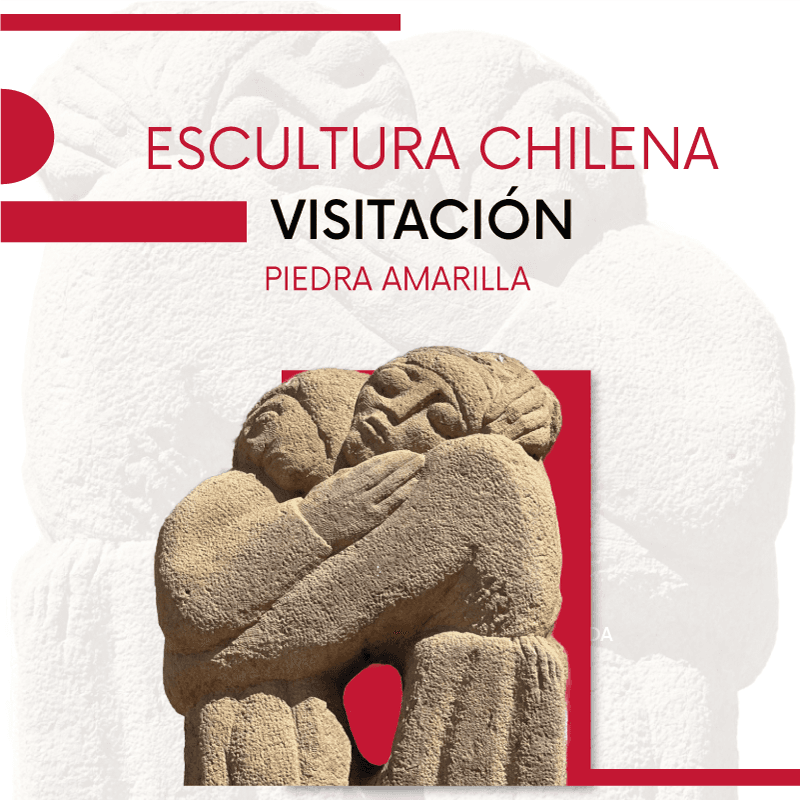
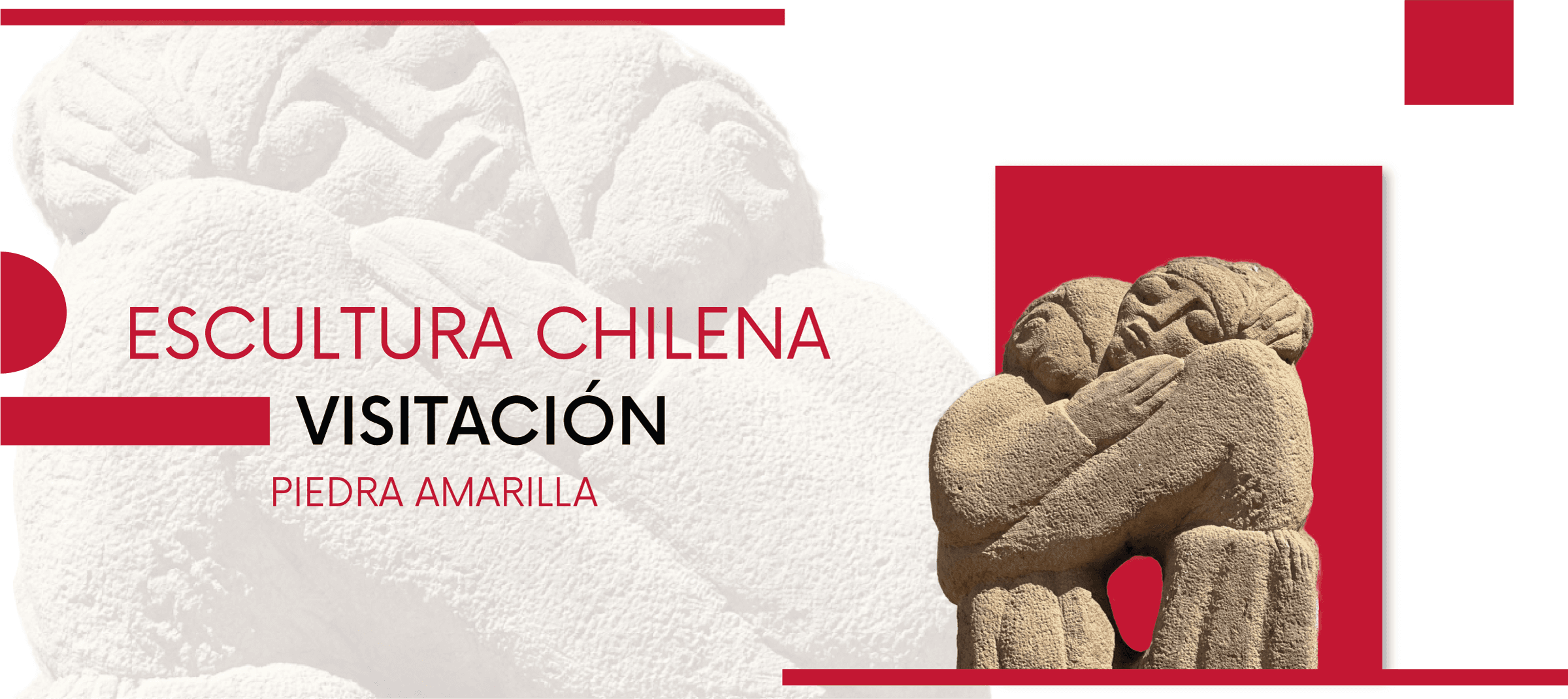
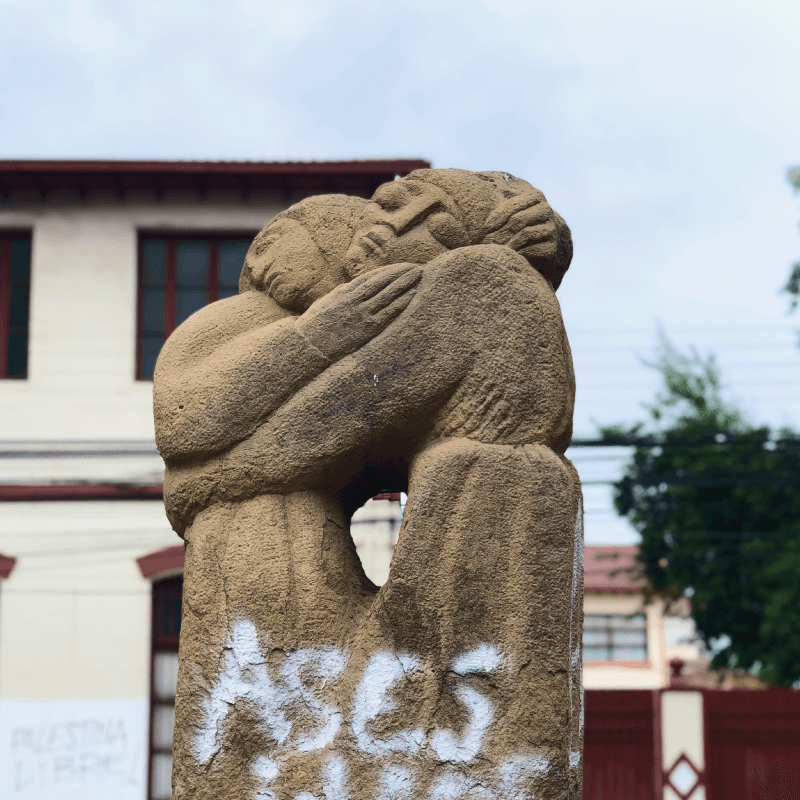
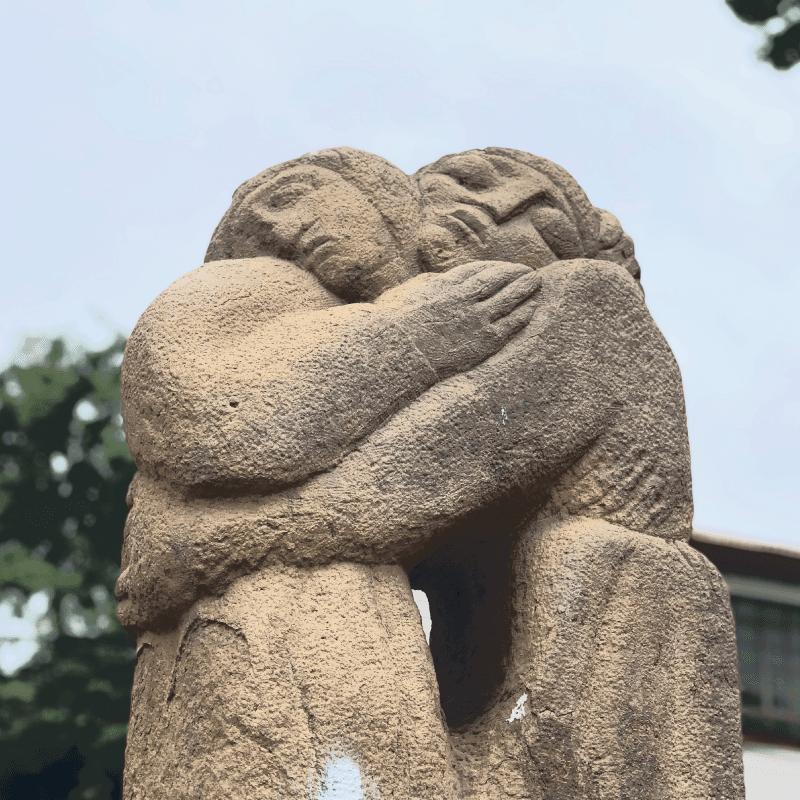
Visitation represents the meeting between Mary and Elizabeth recounted in the Gospel of Luke, when both women were expecting children. Lily Garafulic concentrates the episode in the embrace of two women: their bodies draw close, their arms cross over shoulders and torsos, and the figures are gathered into a single vertical mass. By omitting a setting and narrative attributes, the sculpture places mutual recognition and emotional closeness at the center of the scene.
The work retains recognizable faces and hands while simplifying anatomy and drapery through compact volumes, grooves, and carved planes. This combination of figuration and formal synthesis belongs to Garafulic's modern sculptural exploration, which moved from naturalism toward abstraction without entirely abandoning the human figure.
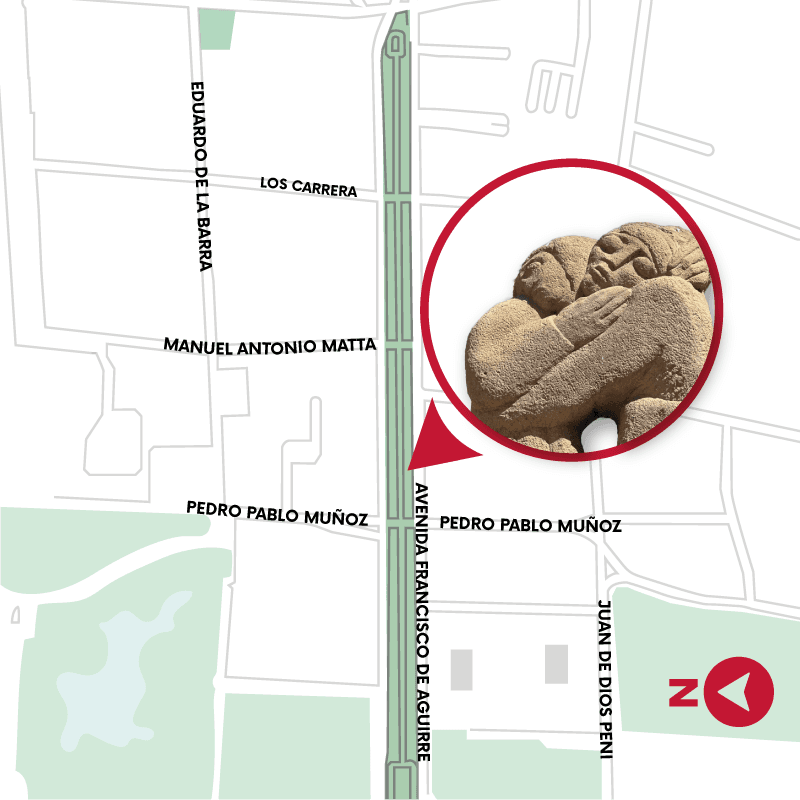
The catalogue of the 59th Official Salon of 1947 already lists a Visitation by Lily Garafulic, executed by direct carving in Colina stone. Gabriel González Videla's memoirs later include the work in La Serena among the Chilean sculptures of the Plan Serena, identifying it as an original by the artist in yellow stone. The matching title, artist, technique, and material support linking the two records, although the documentation reviewed does not yet establish the acquisition process, transportation, or exact installation date on the avenue.
Work record
Technical Data
AUTHOR
Lily Garafulic
CHRONOLOGY
Mid-20th century; documented at the 1947 Official Salon
MATERIALITY
Colina stone, recorded in the historical memoirs as yellow stone.
TECHNIQUE
Direct stone carving
MOVEMENT
Chilean sculptural modernism
WORK DESCRIPTION
Freestanding sculptural group of two standing female figures joined in an embrace and carved as a compact vertical block. Their heads incline toward one another; both faces retain recognizable features, and their arms interlace across shoulders and torsos.
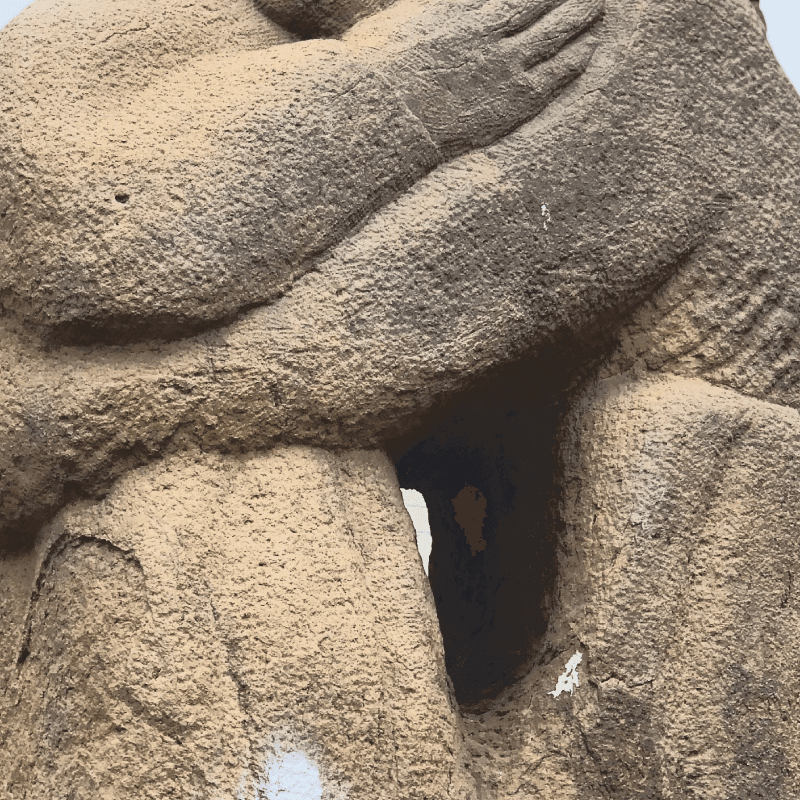
The lower bodies merge into column-like masses covered by long grooves suggesting drapery. A central opening introduces a void between the figures, while incisions in the hair and folds contrast with the predominantly rough, granular surface.