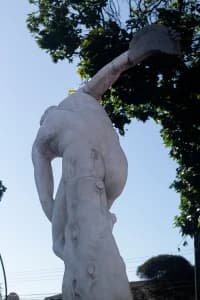
Discobolus – Sculpture in La Serena
Work
Discobolus
Author
Myron
Year
Mid-20th Century (Original: 5th Century BC)
Work narrative
History
Heritage research note (Urban Erratum): A dual historical confusion exists regarding the identity of this piece in La Serena's public space. Although the physical plaque currently installed on the avenue names it the "Discobolus of Alcamenes," the iconography and anatomy of the work unequivocally correspond to Myron's dynamic Discobolus (the crouching athlete). Compounding this misnomer, in old municipal inventories and catalogs, the work appeared as "Discóbolo Escrinomenos," an old 19th-century European textual corruption derived from the writings of Pliny the Elder. On this platform, we restore its true historical authorship, analyzing Myron's masterpiece.
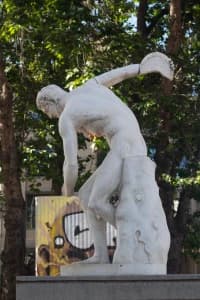
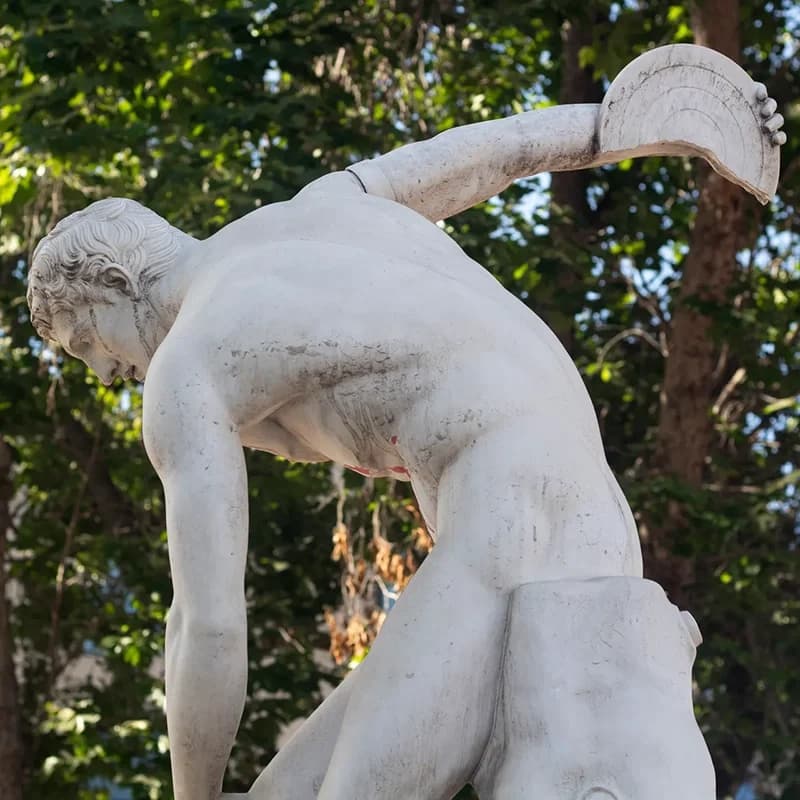
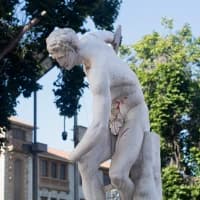
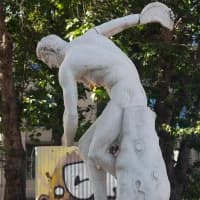
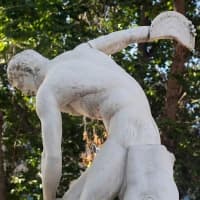
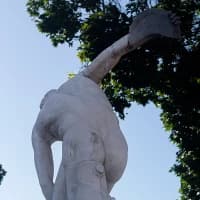
Inaugurated in October 1952, this sculpture exalts universal classical heritage and the ancient athletic ideal within the avenue's open-air museum. The work depicts an anonymous athlete in the moment just before throwing the discus, a motif inspired by the ancient Hellenic Olympic Games, where heroic nudity celebrated physical and spiritual perfection (kalokagathia).
Myron projected an image of maximum contained tension. The pose captures a moment of stasis: the frozen instant between the backward swing and the blind impulse of the throw. The figure embodies geometric harmony and mastery over the body, maintaining a facial expression of absolute serenity (sophrosyne) that contrasts with the violent exertion of the muscles.
Over the decades, this representation of human fragility and power has withstood the passage of time in the public sphere. Although it did not suffer the toppling experienced by other pieces on the avenue, the Discobolus has mutated from a pure, untouchable aesthetic ideal into an urban body marked by local history; today, its presence on the avenue engages in a direct dialogue with the scars of public use, becoming a testament to material endurance and the city's social memory.
Work record
Technical Data
AUTHOR
Myron
CHRONOLOGY
Mid-20th Century (Original: 5th Century BC)
MATERIALITY
Carrara marble (Sculpture) and reconstituted marble (Pedestal)
TECHNIQUE
Carved marble
MOVEMENT
Academic Realism
WORK DESCRIPTION
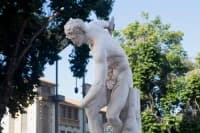
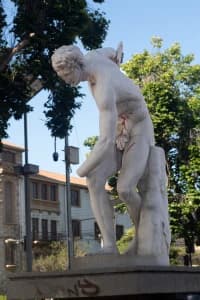
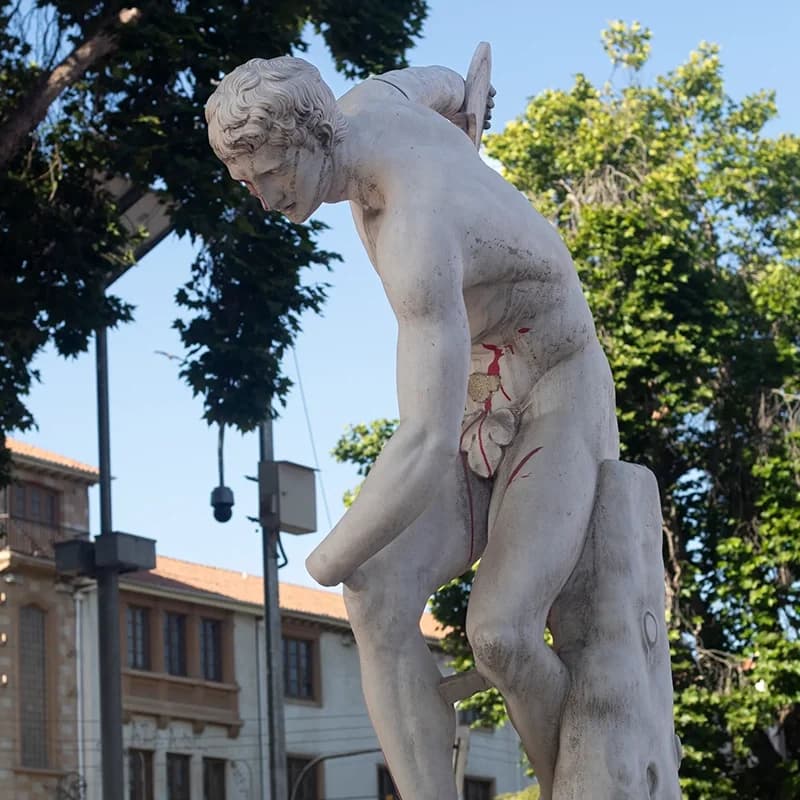
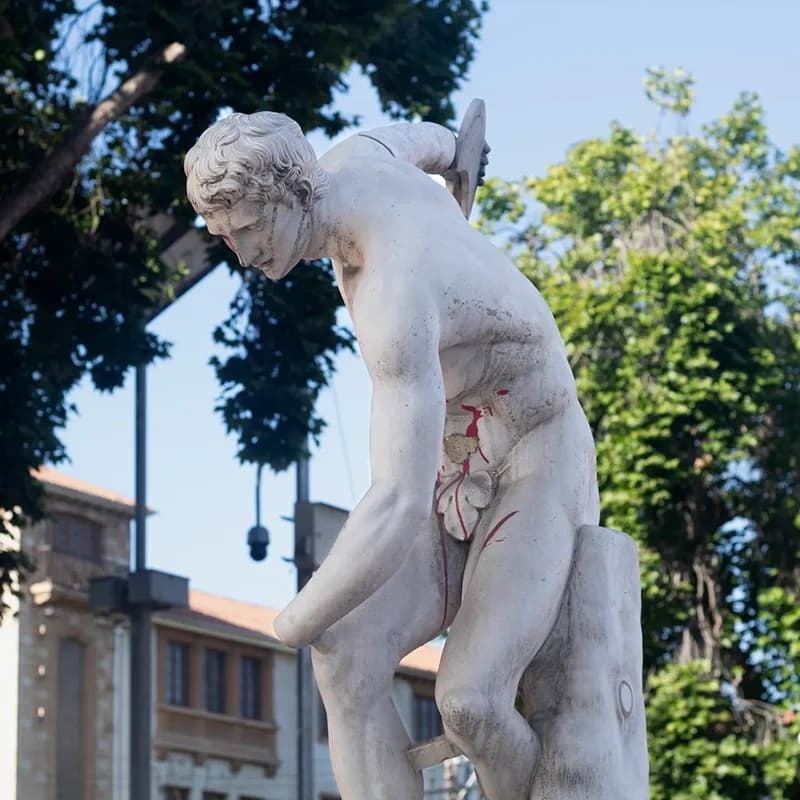
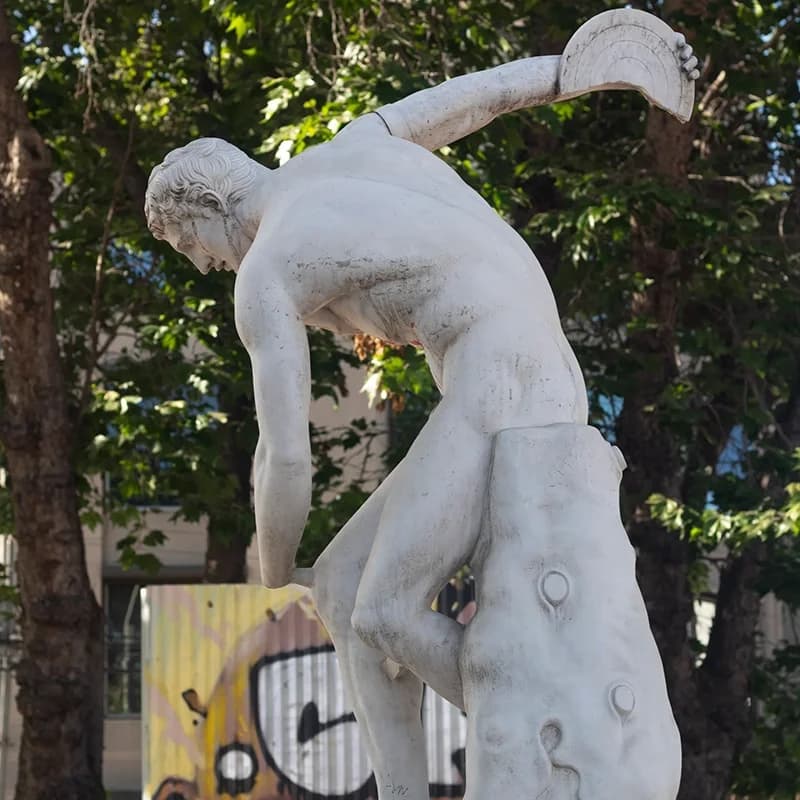
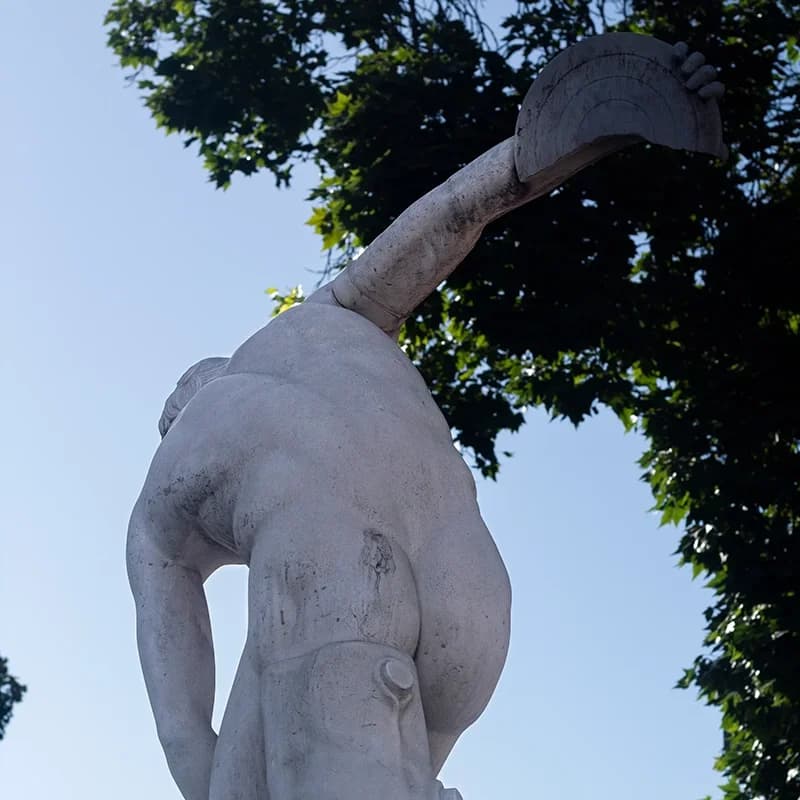
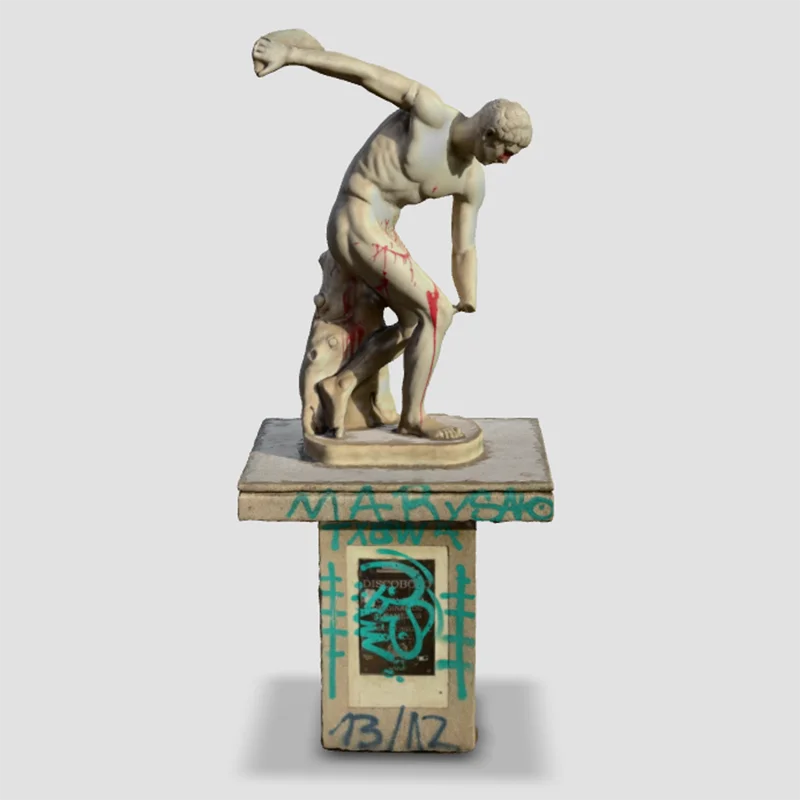
A free-standing sculpture in the round carved in white Carrara marble. It features a helical composition where the weight rests firmly on the right leg, while the torso twists to the side to build momentum. To address the translation of the original bronze into marble, a tree stump was added next to the base to stabilize the weight of the stone.
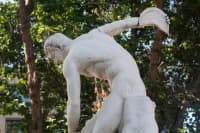
The work shows the passage of time and interaction with the environment: the pedestal exhibits moisture erosion and signs of anthropogenic interventions. The marble figure shows the complete loss of the fingers on the right hand, minor fractures in the lower limbs, and accumulated layers of graffiti and paint that bear witness to its life in the public space.
General Gallery