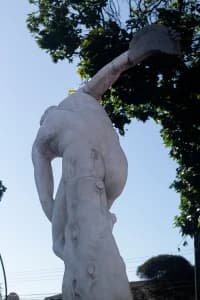
Discobolus – Sculpture in La Serena


Work
Discobolus
Author
Alcamenes
Year
20th Century [Estimated]
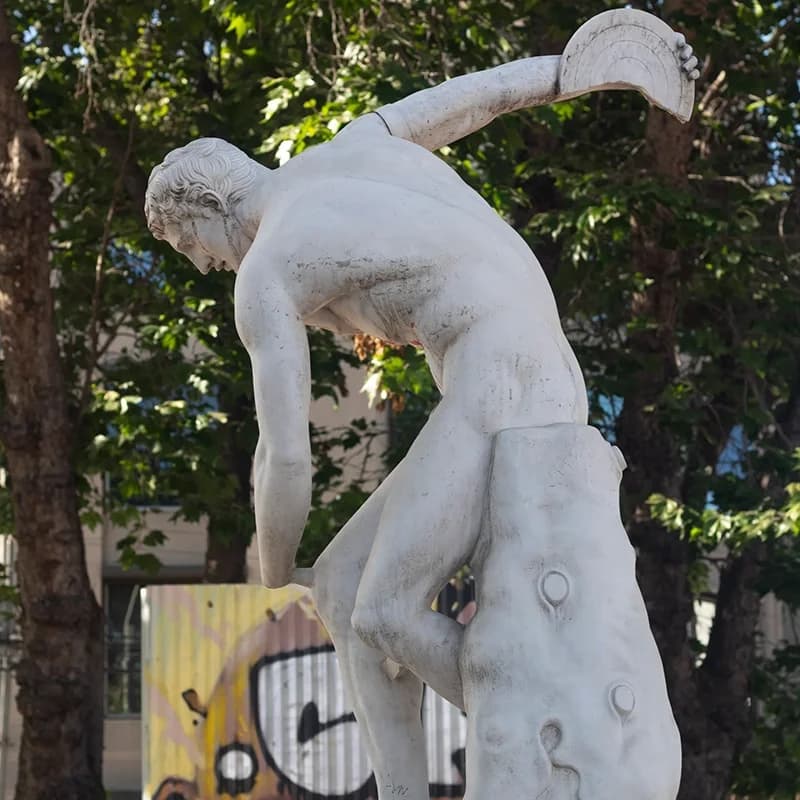
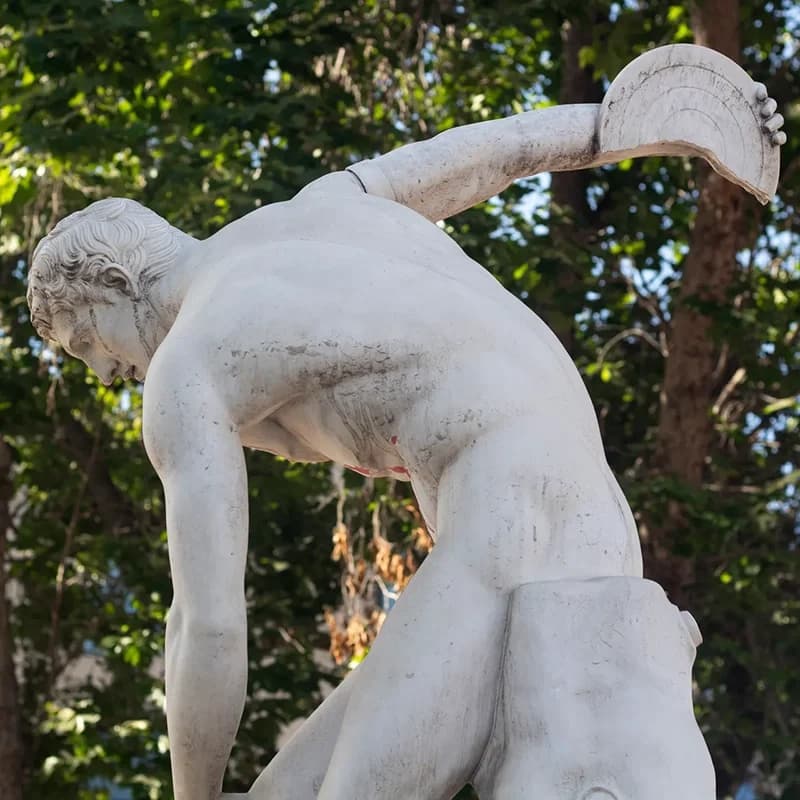
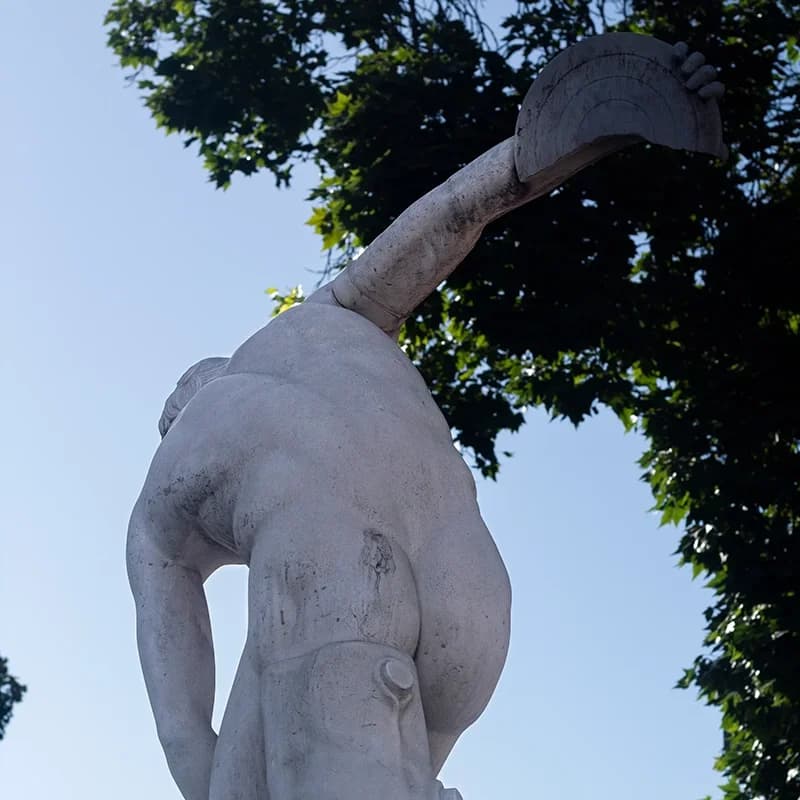
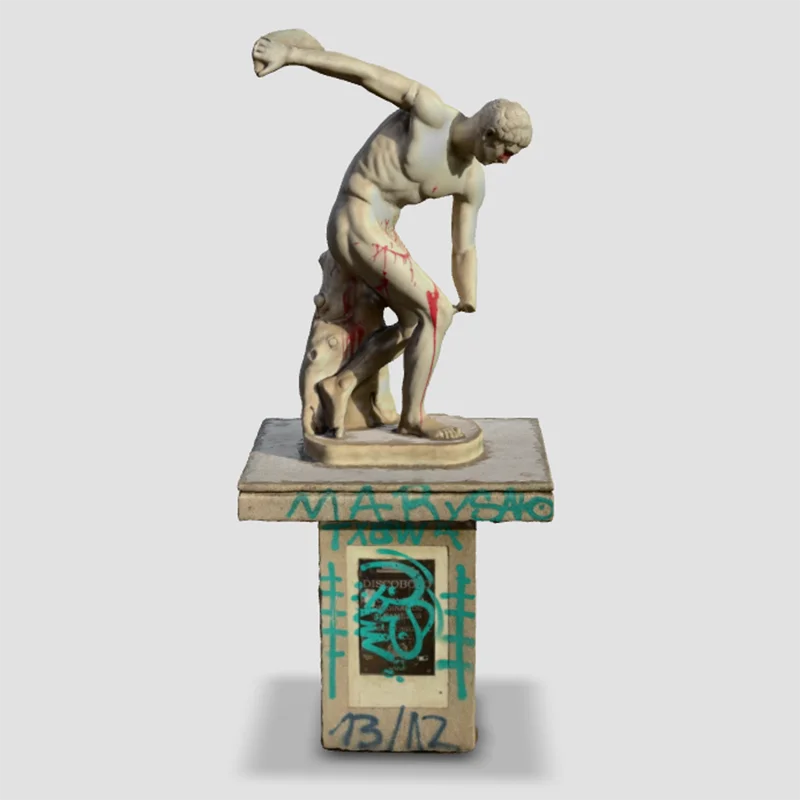
History
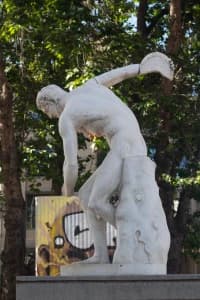
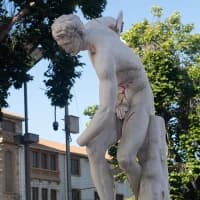
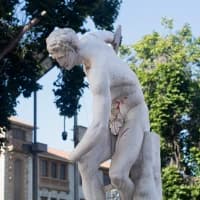
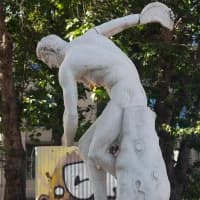
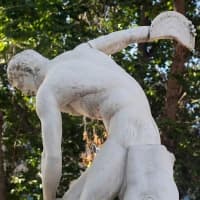
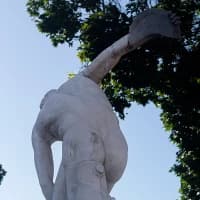
This work represents a variant of the athletic theme of discus throwing.
Unlike Myron's *Discobolus* (which captures the moment of maximum tension), Alcamenes' version shows greater stability and compositional balance, reflecting the classical ideal of serenity.
The work has been interpreted as a celebration of civic virtue in Pericles' Athens, where sport was training for civic and military life.
Technical Data

AUTHOR
Alcamenes, Greek sculptor of the 5th century BC and disciple of Phidias, stood out in the classical period for his mastery of proportion and idealized beauty.
Specialist in bronze and marble, he created works that reflected harmony and technical perfection, addressing mythological themes and representations of deities and athletes.
Although his originals have been lost, his influence endures thanks to Roman copies and historical references, consolidating him as a key figure in classical Greek art.
TIME
20th Century [Estimated]
MATERIALITY
White Carrara marble.
DESCRIPTION
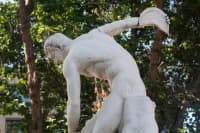
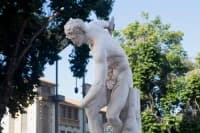
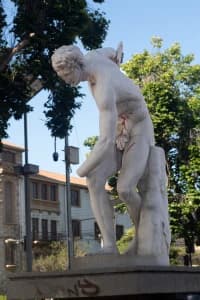
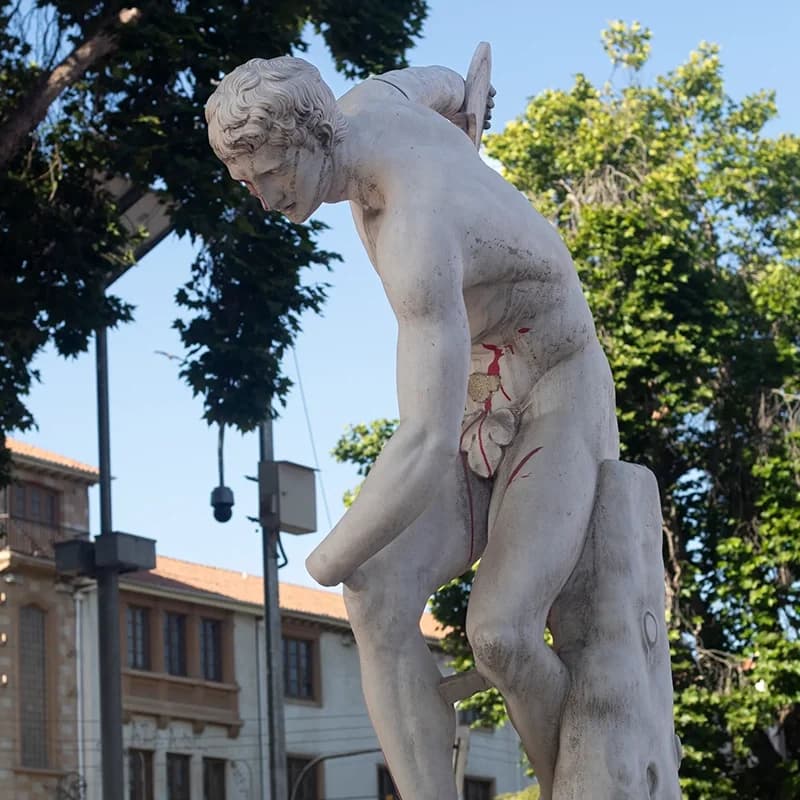
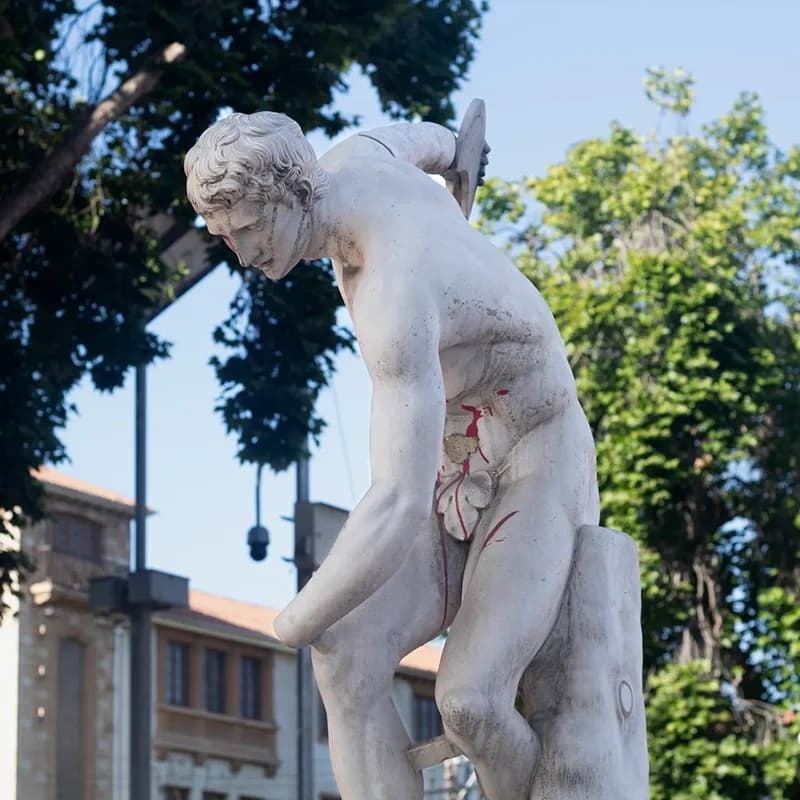
Nude athlete in throwing posture, but with greater verticality than Myron's. Legs more separated and torso less twisted, suggesting a contained movement. Impassive face, typical of the severe style.
The dynamic torsion of the body symbolizes contained strength and balance, while each anatomical detail reflects a deep knowledge of the human body. With a serene expression, oblivious to the effort, the sculpture embodies the ideal of *sofrosyne* (self-control and moderation).
The work balances movement and stillness, showing absolute mastery of body and mind. Beyond the physical, the *Discobolus* represents the quest for perfection and transcendence, freezing an eternal moment of excellence.