
Idolino – Sculpture in La Serena


Work
Idolino
Author
Anonymous
Year
Late 19th century



Work narrative
History
The Idolino of Pesaro is a Roman bronze of a nude youth, 1.46 m high. It was found in 1530 in the Italian city of Pesaro and is now in the National Archaeological Museum in Florence. “Idolino” is an Italian diminutive of “idol”.
When it appeared, it was taken for an image of Bacchus and attributed to a master of Classical Greece. Today it is thought to have been a domestic object: a tray support in the shape of a vine was found with the figure, and it is interpreted as a lamp or tray holder, a luxury piece of furniture from a wealthy Roman house and not the copy of a famous statue.
The bronze was widely reproduced in plaster casts. Three are recorded: one at Kedleston Hall, in England, around 1758; another made in 1838 for the French Academy in Rome; and another that the Sorbonne, in Paris, acquired between 1891 and 1904.
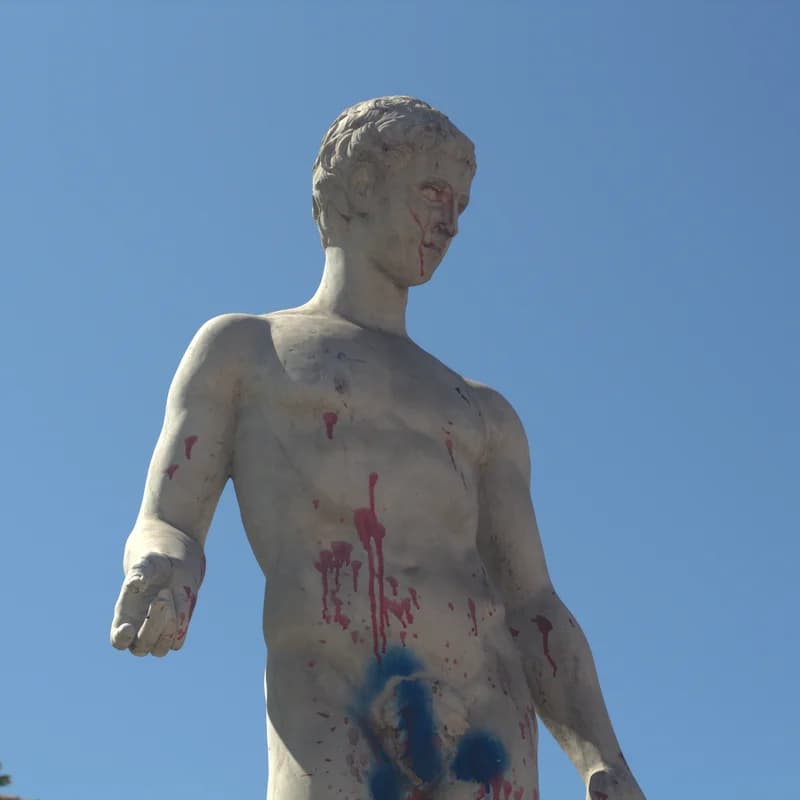
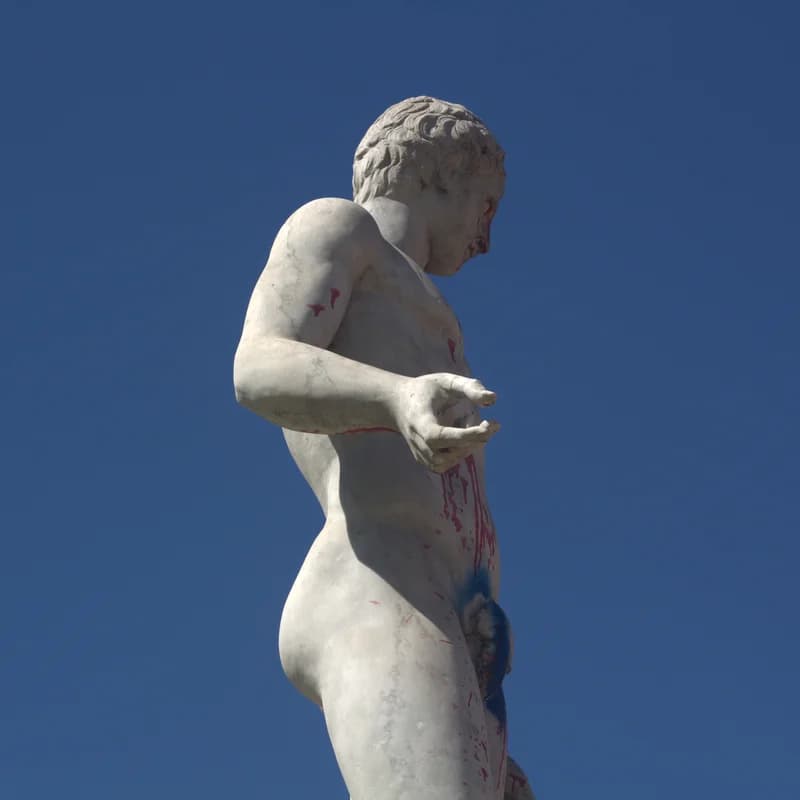
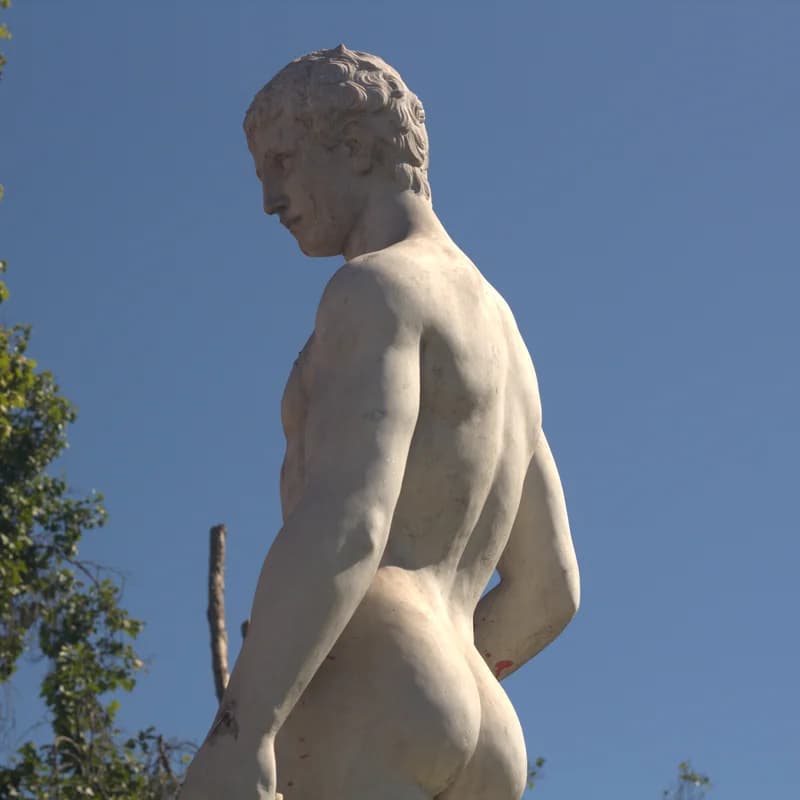
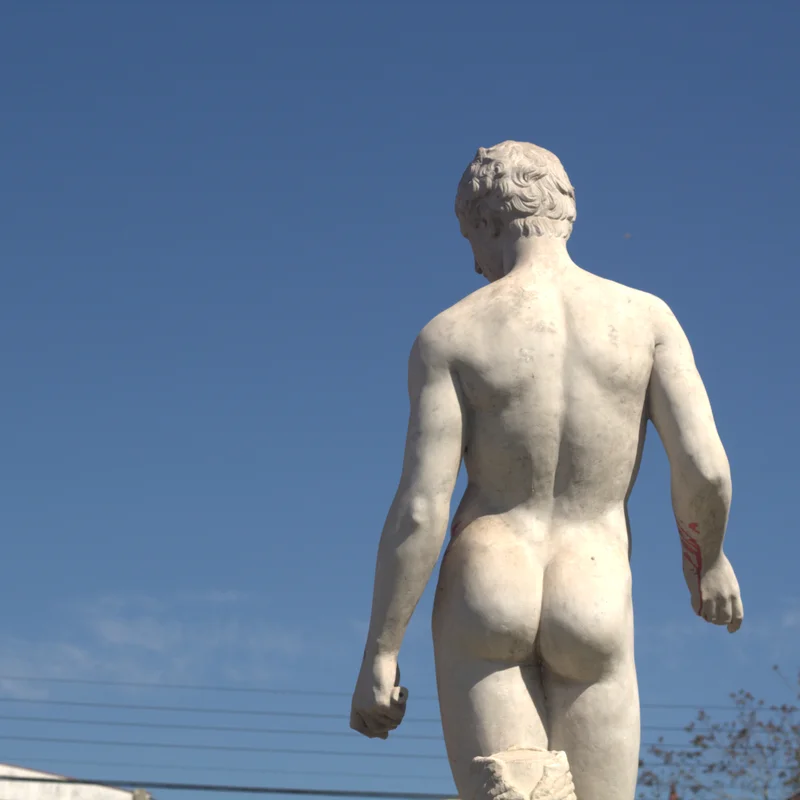
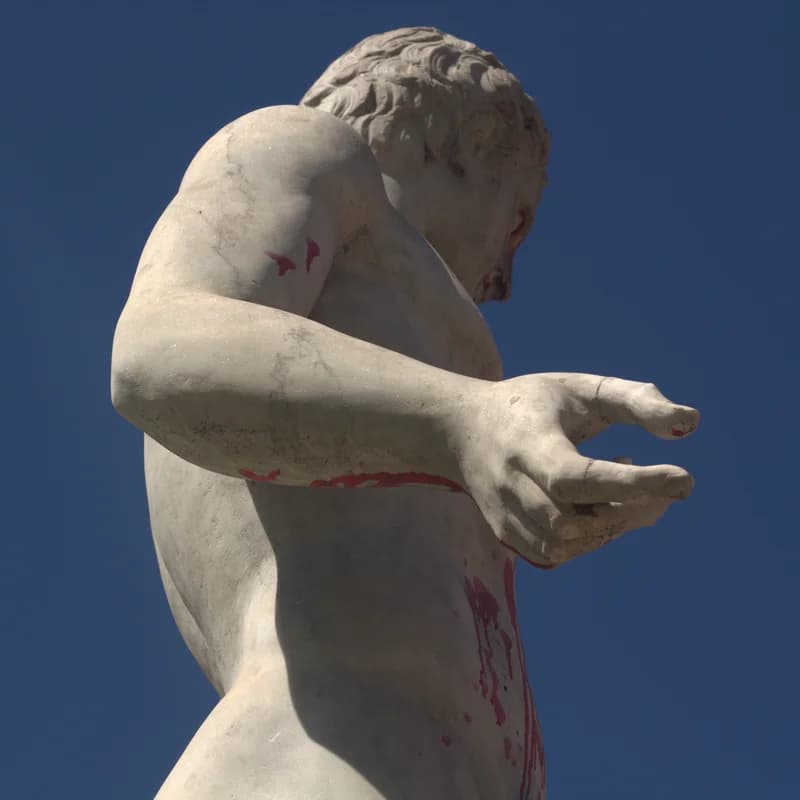
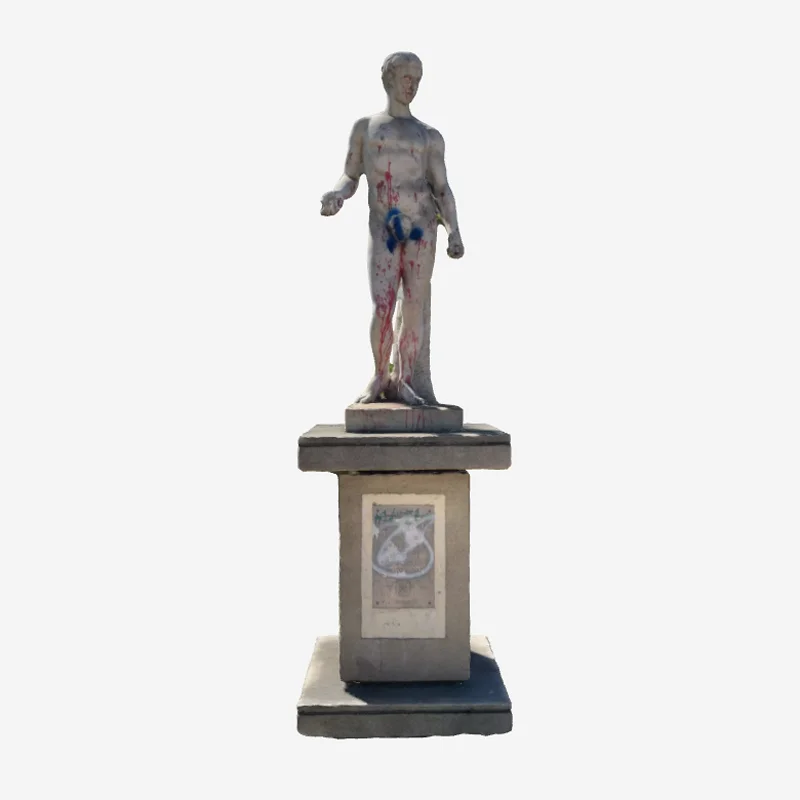
The La Serena sculpture received that name, but it does not repeat the bronze. It shares with it the juvenile nude, the contrapposto and the advanced right arm, but its head turns to the opposite side and the figure leans on a large stone support that the bronze does not have. It has not been shown that it copies the bronze.
Its pose, with one arm lowered, the opposite one open and the head turned towards the lowered arm, recalls, in reverse, the so-called Capitoline Antinous, in the Capitoline Museums. But the hairstyle, the face and the legs do not match, and the open left arm of that Antinous is a restoration by Pietro Bracci in 1734, so the resemblance belongs to the restored image and not to the ancient one. No reversed version of the Capitoline statue matching the one in La Serena has been found either: the model remains unidentified.
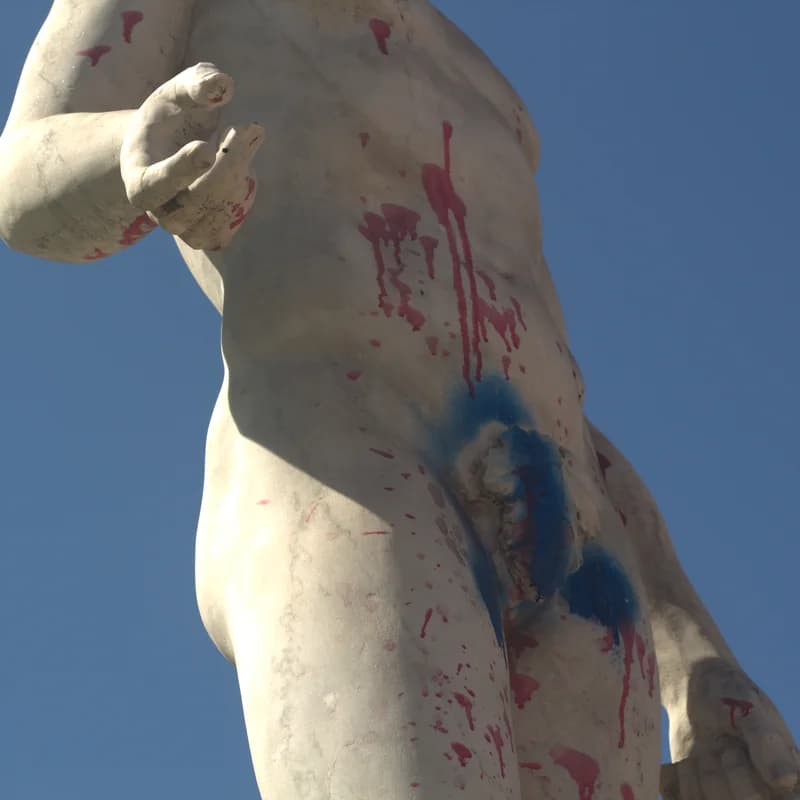
Gabriel González Videla records it as “Idolino, obra griega” (Idolino, Greek work), of the late nineteenth century, in statuary marble and acquired in Rome from the Cesare della Seta Gallery, and adds that it would be a Roman copy of a Greek original of the second century BC, which has not been verified. A 1983 technical report describes it in Carrara marble, with the right hand already without its five fingers and an unidentified object in the left.
Work record
Technical Data
AUTHOR
Maker of the model and of the La Serena reproduction unidentified; the Cesare della Seta Gallery (Rome) appears as the place of acquisition, not as the maker
CHRONOLOGY
Reproduction recorded as a late nineteenth-century work; execution date undocumented; model unidentified
MATERIALITY
White marble
TECHNIQUE
Marble carving
MOVEMENT
Classical tradition (reproduction)
WORK DESCRIPTION
Free-standing sculpture carved in white marble, showing a nude young man standing, with an athletic, idealised anatomy. His weight rests on one leg while the other relaxes and bends slightly; the pelvis shifts and the torso compensates for the movement. The head, with short hair in wavy locks, bows down and turns towards the figure’s left. The right arm moves away from the body, bends at the elbow and extends the forearm forward with an open hand whose fingers are broken. The left arm hangs at the side, with the hand closed. Beside one of the legs stands a stone support in the shape of a tree trunk, with a rough surface.
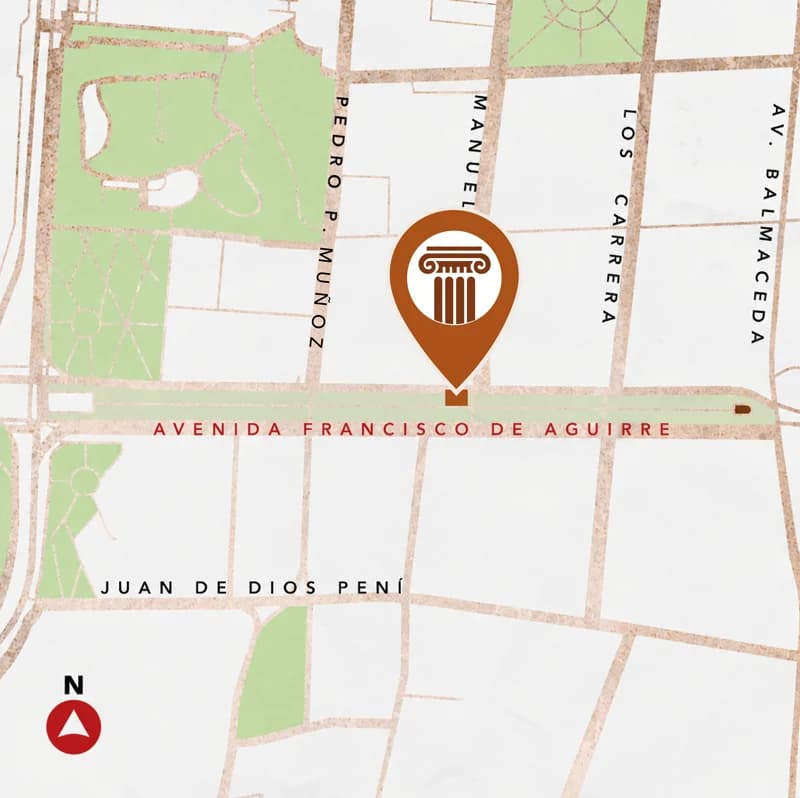
The figure stands on a plinth that rests on a stone pedestal with a square base.
General Gallery


