
Discophoros – Sculpture in La Serena


Work
Discophoros
Author
Naucydes
Year
Late 5th to early 4th century BC


Work narrative
History
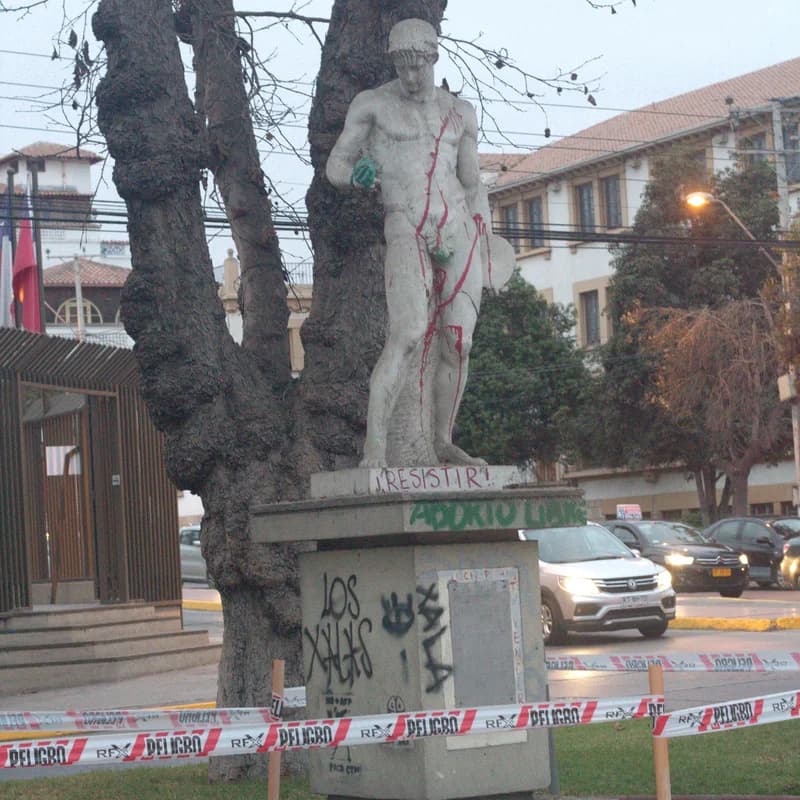
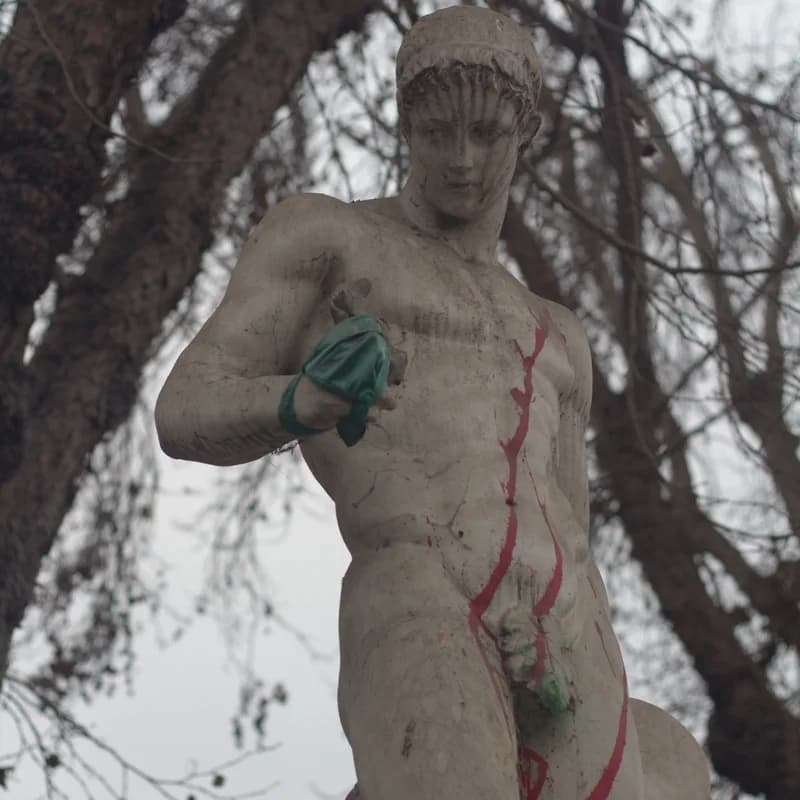
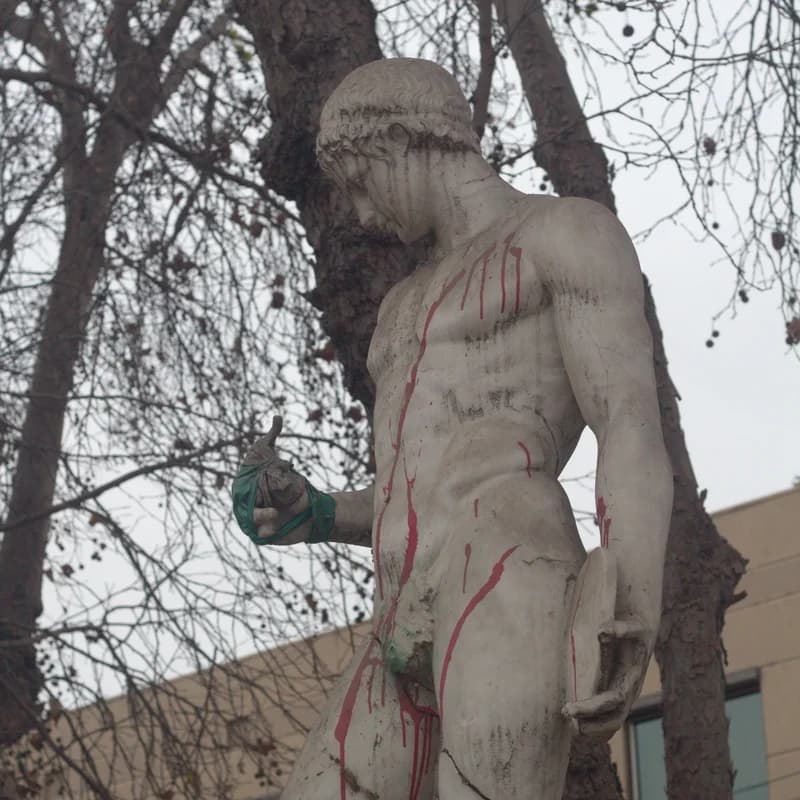
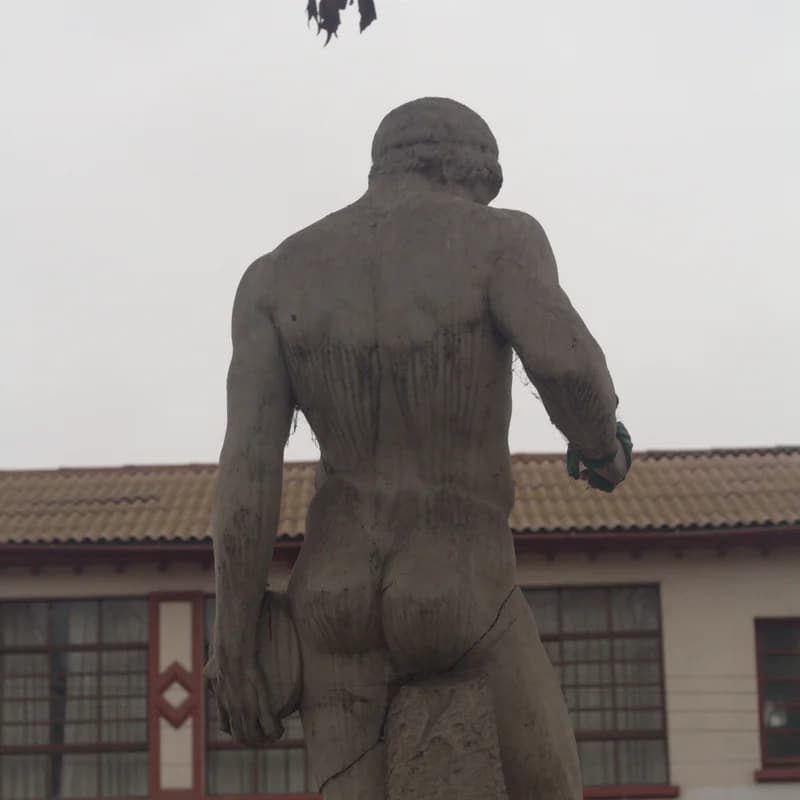
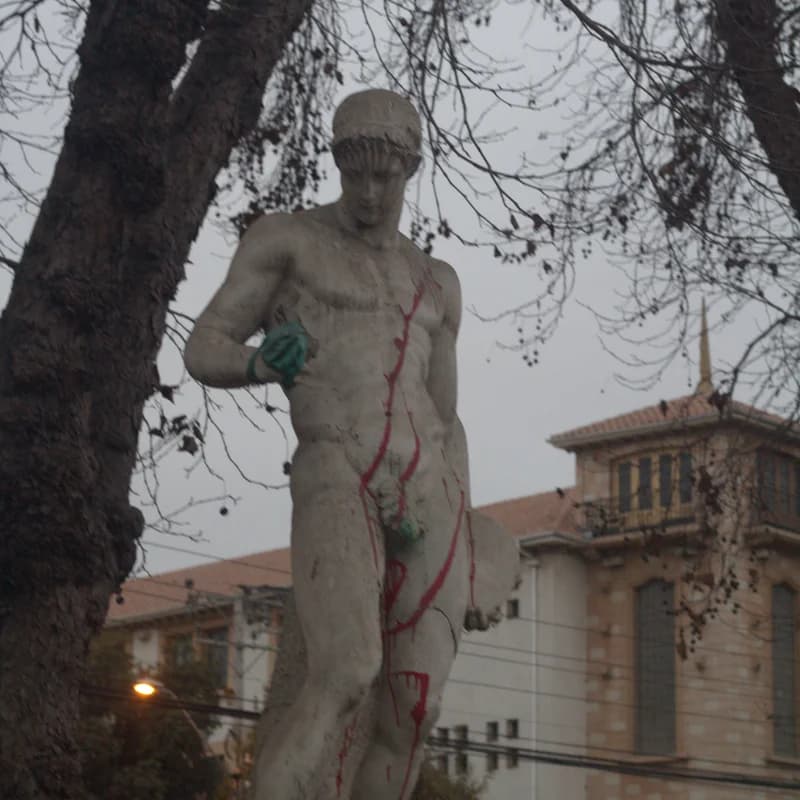
The sculpture shows a young nude athlete holding a discus in his left hand, against the thigh. He lowers his head, rests his weight on the left leg and advances the right, while the right arm bends forward. It is a restrained figure, without the movement of the throw, which is why it is called a discophoros, “discus bearer”, and not a discobolus, “discus thrower”.
The composition reproduces a type known from several Roman copies, among them those in the Vatican Museums and the Louvre. The Louvre catalogues them as “Discophore” and attributes the original, a bronze, to Naucydes, around the first quarter of the fourth century BC; the University of Tübingen dates it between 410 and 400 BC. That attribution, which goes back to Visconti, has not been accepted by all scholars: it is the attribution of a type and not a demonstrated authorship. In the literature the type is also known as the “preparing discobolus” (*Antretender Diskobol* in German) or the *Standing Diskobolos*.
In La Serena the sculpture was recorded as “Discóbolo, de Alcamenes” (Discobolus, by Alkamenes) and “Encrinómenos”, names that come from a debate about the type it reproduces. Pliny mentions separately Alkamenes, a pupil of Pheidias, as the maker of a bronze pentathlete called Enkrinomenos, and Naucydes as the maker of a Mercury, a Discobolus and a man sacrificing a ram; he does not equate the Enkrinomenos with any discobolus. That equivalence is a modern proposal by Kekulé, joined by other scholars, while Visconti linked the same type to Naucydes. The meaning of “Enkrinomenos” is not certain either: it has been understood as “recognized as perfect”, as the athlete examined before the competition or, reading the text differently, as “the one who anoints himself”. Current catalogues attribute the type to Naucydes, although not all scholars accept it, and for that reason the identification with Alkamenes and the Enkrinomenos does not hold.
The La Serena sculpture is a marble reproduction of this type. Gabriel González Videla records it as acquired in Rome, and a 1983 technical report describes it in Carrara marble. The workshop, the maker and the date of the reproduction are undocumented, as is its relation to any specific statue.
Work record
Technical Data
AUTHOR
Naucydes (disputed attribution of the prototype); maker of the La Serena reproduction undocumented
CHRONOLOGY
Marble reproduction of undocumented date; model of the type from the late fifth to the early fourth century BC
MATERIALITY
White marble
TECHNIQUE
Marble carving
MOVEMENT
Classical tradition (reproduction)

WORK DESCRIPTION
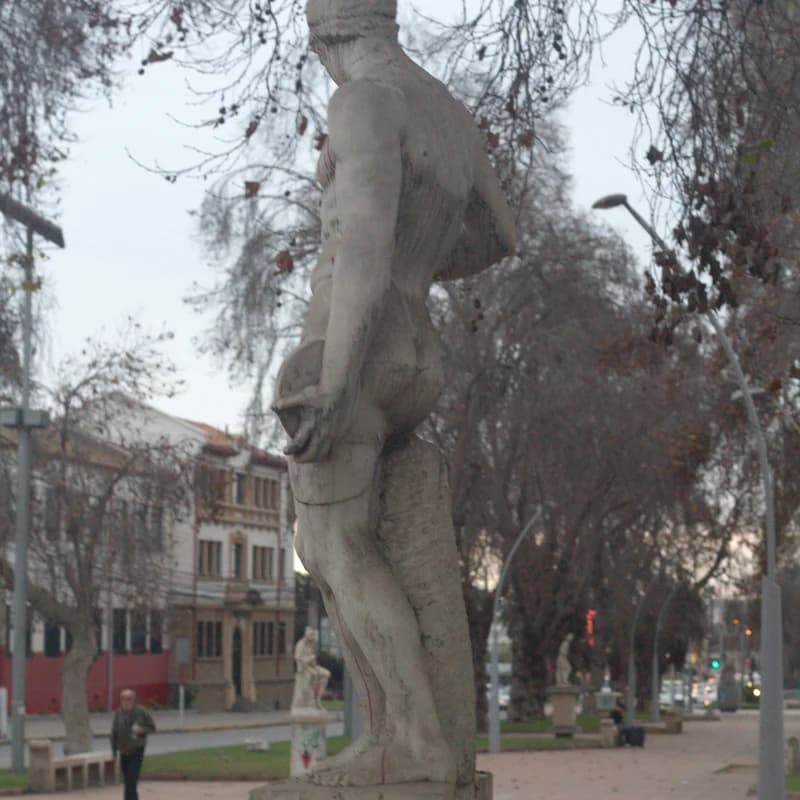
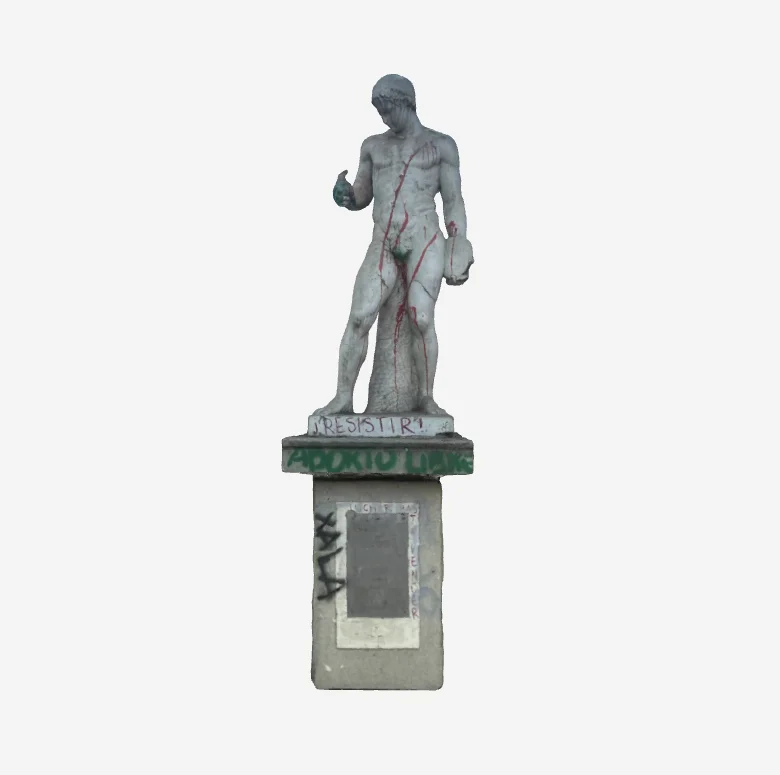
Free-standing sculpture carved in white marble, showing a nude young athlete standing, with his head bowed and his hair short in locks. His weight rests on the left leg, which stands beside a tree-trunk support; the right leg advances and bends slightly. The left arm hangs down and the hand holds the discus against the thigh. The right arm bends in front of the body, with the forearm forward and the fingers curled. A carved leaf covers the genitals.
The figure stands on a low rectangular plinth that rests on a square pedestal. The rough-surfaced trunk stands behind the left leg and steadies the composition.
General Gallery


