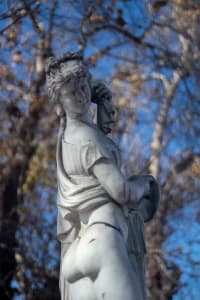
Callipygian VenusSculpture in La Serena

Banner por defecto

Work

Callipygian Venus

Author

Unknown

Year

Late 1st century BCE

3D model poster
Loading 3D model...
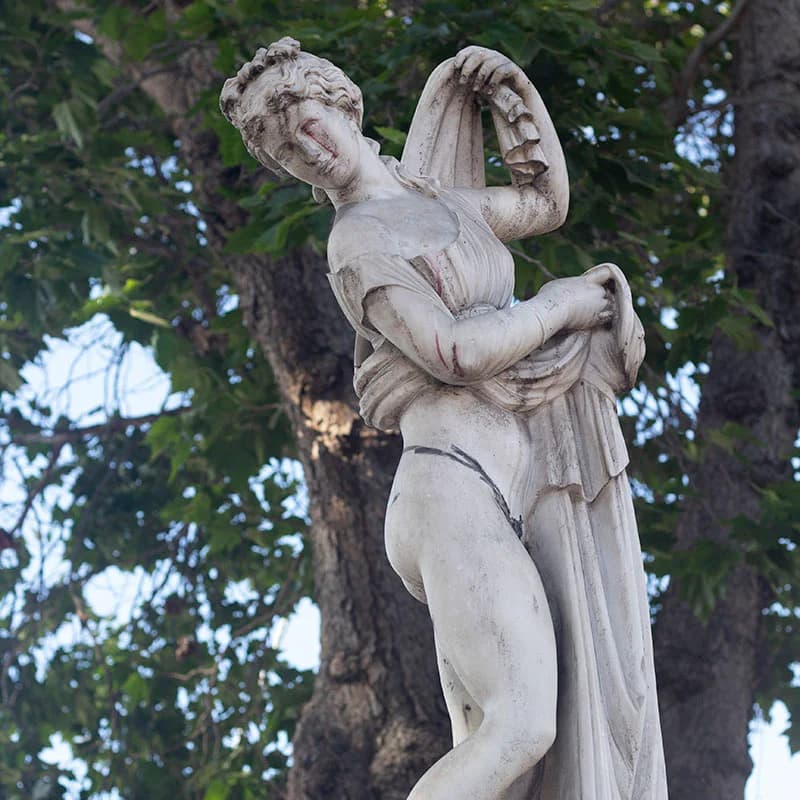
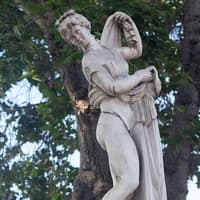
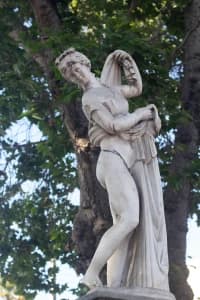
Three-quarter view of Callipygian Venus lifting her drapery beneath the trees
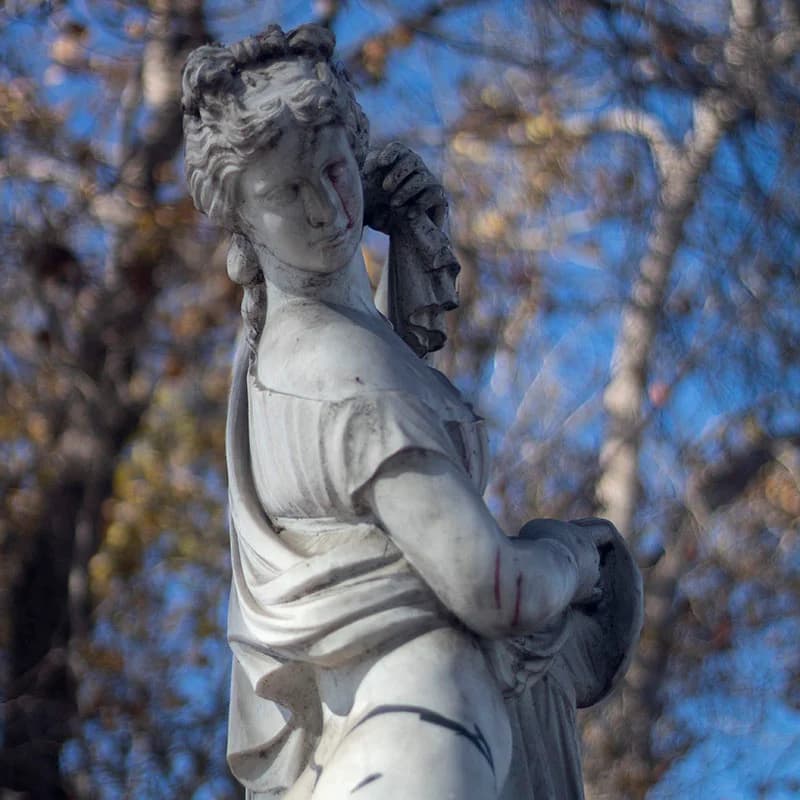
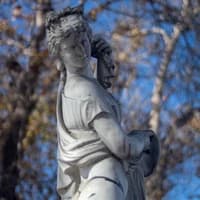
Close upper view of Callipygian Venus turning toward her raised drapery
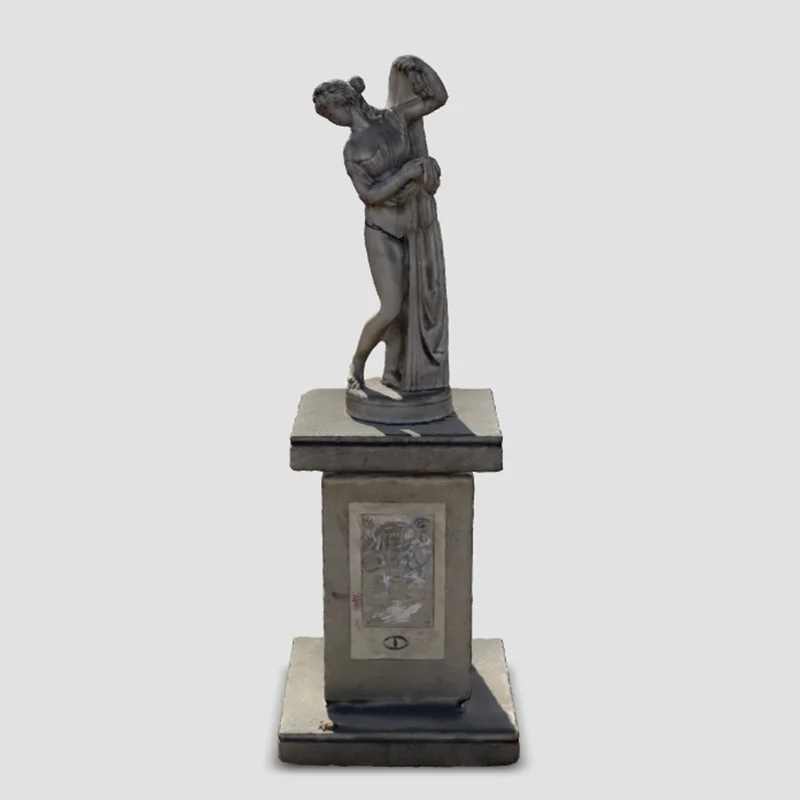
3D model preview of Callipygian Venus lifting her drapery
Three-quarter view of Callipygian Venus lifting her drapery beneath the trees
Close upper view of Callipygian Venus turning toward her raised drapery

Work narrative

History

The sculpture installed in La Serena belongs unmistakably to the Callipygian Venus type: a standing female figure lifts her garment to uncover her back and hips while turning her head towards her own body. The epithet derives from the Greek Kallipygos, usually translated as 'of the beautiful buttocks'. The gesture and the contrast between exposed anatomy and dense drapery are characteristic of a composition associated with the early Hellenistic tradition.

The direct reference for the modern replicas is the marble in the National Archaeological Museum of Naples (MANN, inv. 6020), a Roman work generally dated to the late 1st century BCE after a lost Hellenistic prototype traditionally placed around 300 BCE. Neither the maker of the prototype nor the sculptor of the Roman marble is known. The Neapolitan statue is also the result of extensive modern restoration. A 16th-century intervention supplied a missing head and established the backward-looking pose. In 1786 Carlo Albacini restored or replaced major parts, including the head and limbs, while preserving that visual solution. Replicas based on the Farnese statue therefore reproduce a composite image formed by an ancient body and modern restorations.

Athenaeus of Naucratis recounts in the Deipnosophistae a story about two sisters whose beauty contest led to the dedication of a sanctuary to Aphrodite Kallipygos in Syracuse. The tale explains the cult epithet in later literary tradition, but it is not historical evidence for the creation of the sculptural prototype. It should therefore be understood as part of the reception of the name, not as the documented origin of the statue.

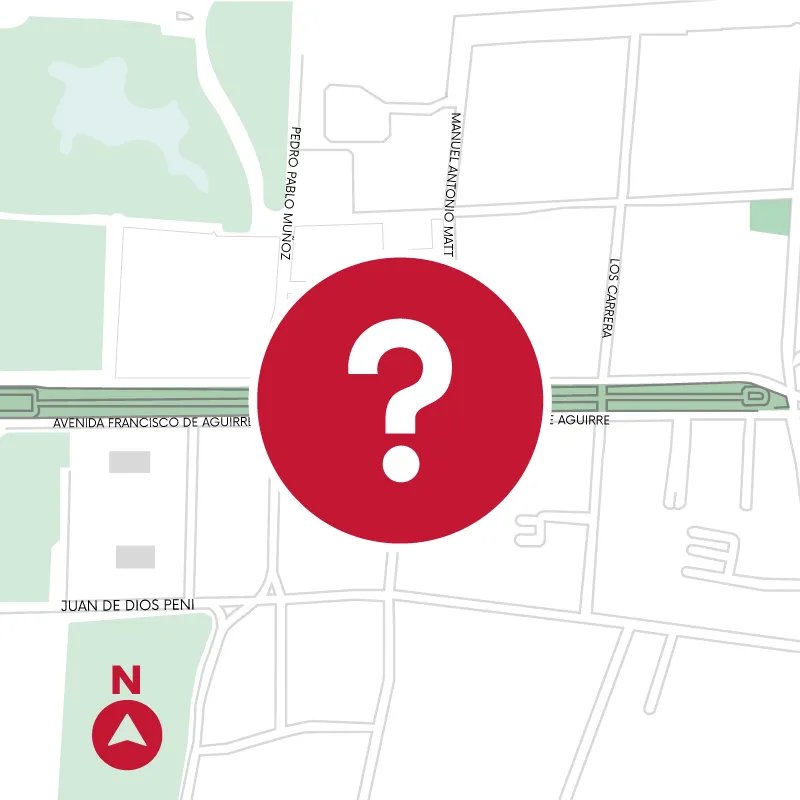
The historical acquisition record describes the La Serena work as an 'ancient copy' in white statuary marble after the original in the National Museum of Naples. It was purchased in Rome from the Cesare della Seta Gallery on Via del Babuino through the efforts of Raúl Irarrázaval, Chilean ambassador to the Holy See, and adviser Antonio Rodríguez. The available documentation does not identify the person or workshop that carved it, its exact date of production or its earlier chain of ownership. It was shipped from Italy through the port of Coquimbo and installed in the open-air museum on Avenida Francisco de Aguirre, inaugurated on 31 October 1952.

Work record

Technical Data

AUTHOR

Unknown Hellenistic prototype; anonymous Roman marble, restored by Carlo Albacini in 1786; maker of the La Serena copy undocumented

CHRONOLOGY

La Serena marble copy: exact carving date undocumented, acquired and installed in 1952; direct Roman reference: late 1st century BCE, restored in the 16th century and by Carlo Albacini in 1786; lost Hellenistic prototype traditionally dated to c. 300 BCE

MATERIALITY

White statuary marble; stone pedestal.

TECHNIQUE

Marble carving; reproduction method undocumented

MOVEMENT

Hellenistic tradition transmitted through a restored Roman copy

WORK DESCRIPTION

Standing female figure whose body forms a pronounced torsion as she lifts and gathers a long garment. One arm rises behind the shoulder holding the upper edge of the cloth, while the other draws the fabric across the torso. The gesture uncovers the back, hip and upper leg, and the head turns and inclines towards the exposed body. Smoothly modelled anatomy contrasts with the deep, densely grouped folds that descend to the base. The marble figure is mounted on a stone pedestal and shows surface wear and discolouration consistent with its outdoor setting.

ABOUT THE AUTHOR

The artists responsible for the lost Hellenistic prototype, the Roman marble in Naples and the copy installed in La Serena are unknown. Carlo Albacini was not the author of the ancient composition: in 1786 he restored the Farnese marble and renewed several missing parts while retaining its backward-looking pose. The Cesare della Seta Gallery sold the La Serena copy, but the available documentation does not identify its carver or workshop.