
Danaid – Sculpture in La Serena
Work
Danaid
Author
Anonymous
Year
Date undocumented
Work narrative
History
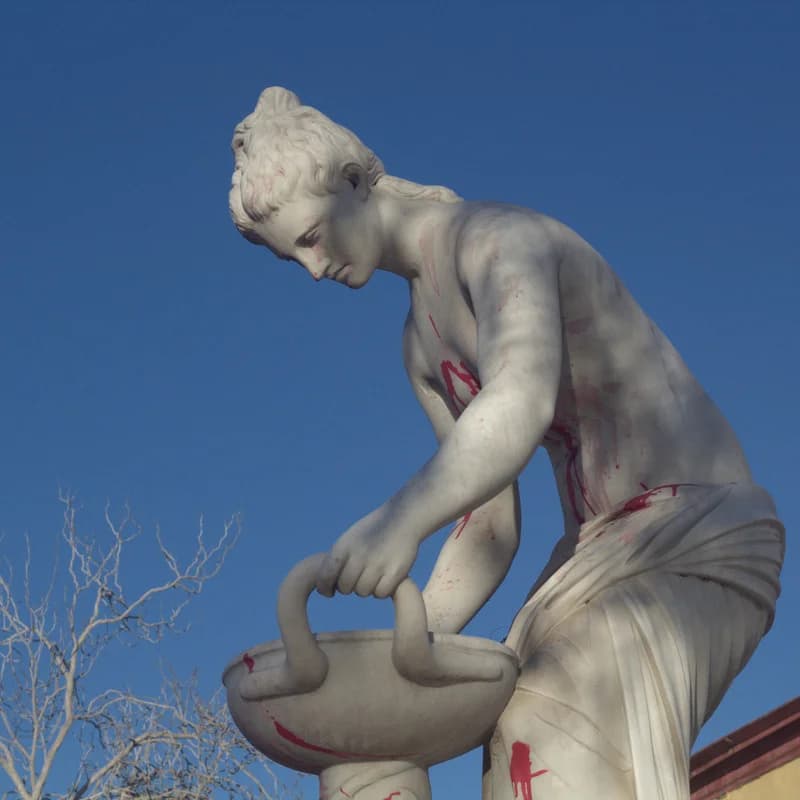
Danaid is the traditional name of a female figure leaning over a large two-handled basin. In Greek mythology the Danaids are the daughters of Danaus, king of Argos. According to Apollodorus, they killed their husbands on their father’s orders; only Hypermnestra spared hers. Another tradition condemns them to fill bottomless vessels forever in Hades. This is why a figure with a vessel could be read as a Danaid. The vessel alone, however, does not identify her: fountain nymphs are shown with similar basins and jars.
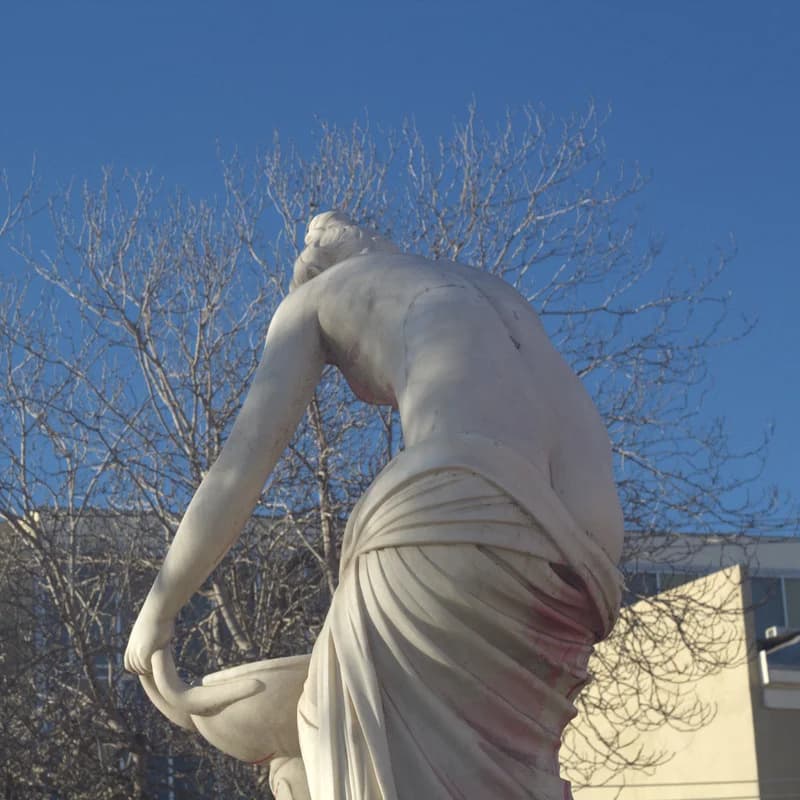
The La Serena sculpture reproduces a statue found at Palestrina in 1771, now in the Vatican Museums, known since the eighteenth century as a Danaid. The catalogue of the Museo Pio-Clementino records it as “Danaide trovata nei scavi di Palestrina” (Danaid found in the excavations at Palestrina), yet in 1787 Friedrich Wilhelm Basilius von Ramdohr already describes it as “restored as a Danaid”: its mythological identity belonged to its restored and interpreted state. The Museo di Roma now calls it a “Nymph”. Danaid is therefore its historical name, not a demonstrated ancient identification. A photograph by Alessandro Vasari from about 1870–1880 documents the Vatican statue with leaning torso, lowered head, drapery over hips and legs and a large basin, an arrangement that matches the La Serena sculpture. Another Roman statue, a nymph with a basin in the Galleria Borghese, was compared with it in the nineteenth century and shows that there was a family of ancient variants with important restorations.
The *Memoirs* and the local plaque, marked MMVII, present the sculpture as a copy of a Greek original of the fourth century BC. That chain has not been verified in an archaeological record for the Vatican statue and should be understood as a historical attribution, not as an established fact.
In his 1975 *Memoirs*, Gabriel González Videla records the *Danaide* as a modern work in light statuary white marble by the sculptor Romanelli, acquired at his workshop in Florence, and as a reproduction of an original in the Vatican. The 2000 technical report of Chile’s Directorate of Libraries, Archives and Museums (DIBAM) and the current plaque repeat that attribution; the 1983 and 2000 reports record the marble as Carrara marble; a postcard held by the Chilean National Digital Library, dated between 1949 and 1959, already calls it “Danaide y un cuenco” (Danaid and a bowl). Romanelli is the surname of a family of Florentine sculptors with several active generations, so the sources consulted do not show who executed this copy or when.
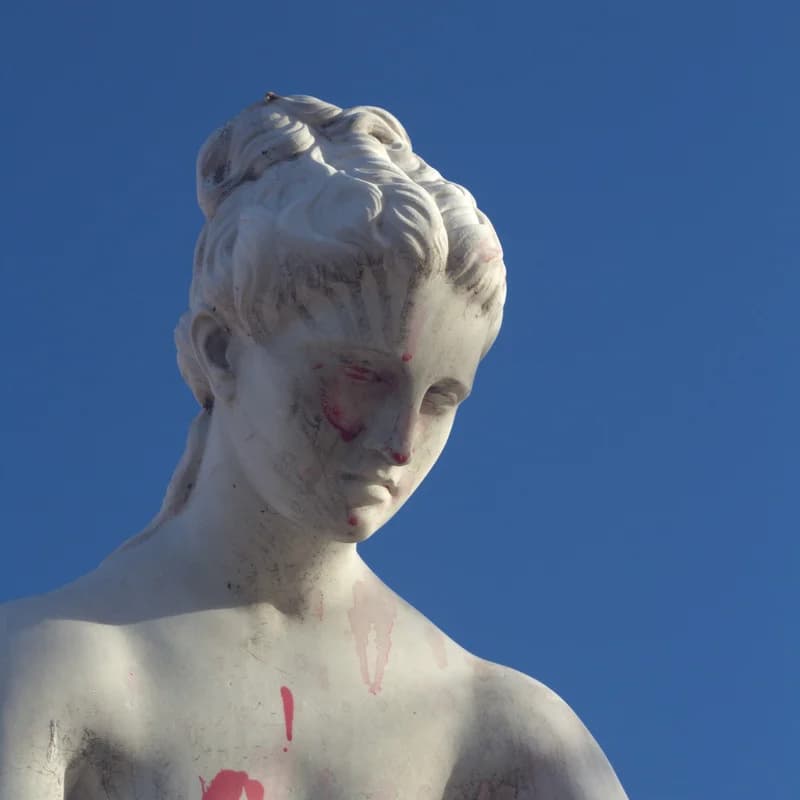
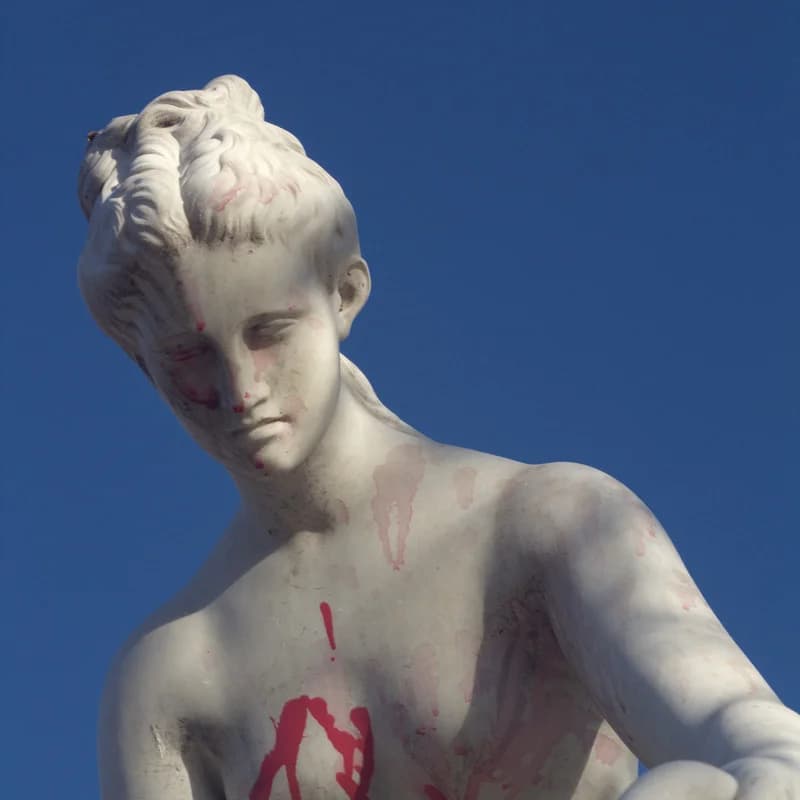
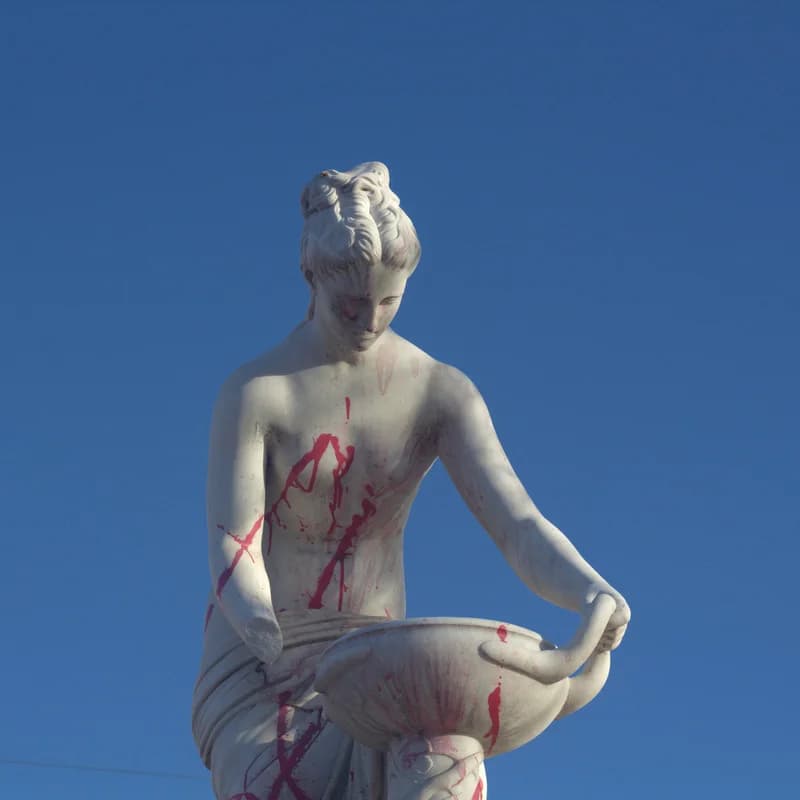
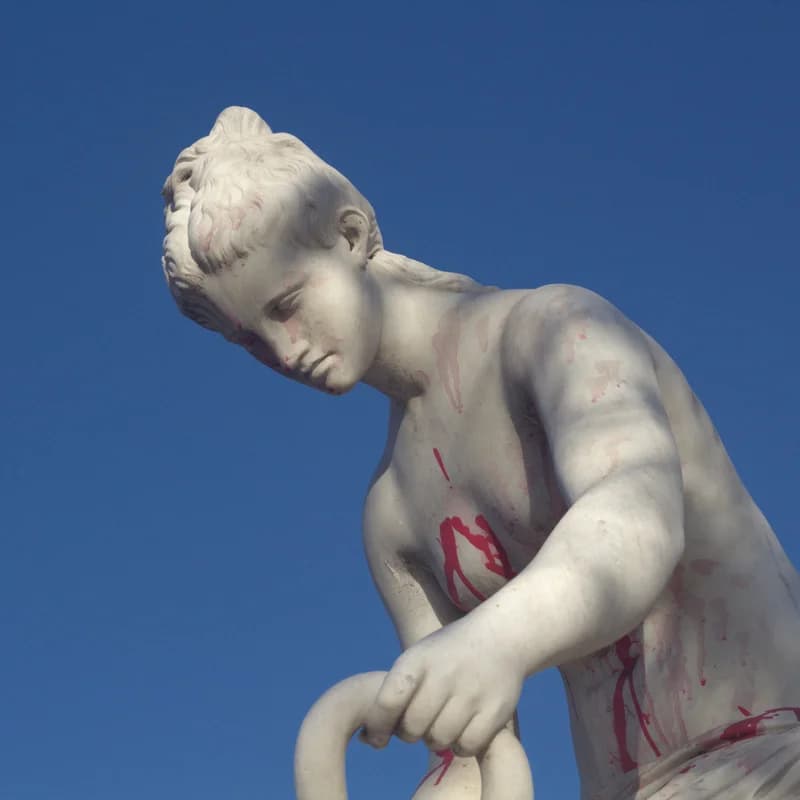
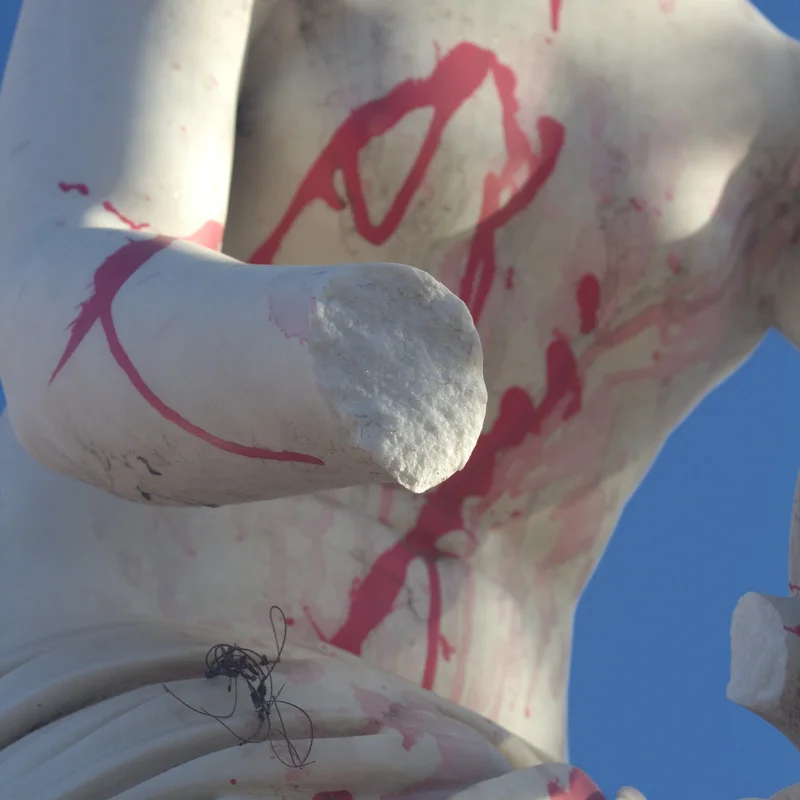
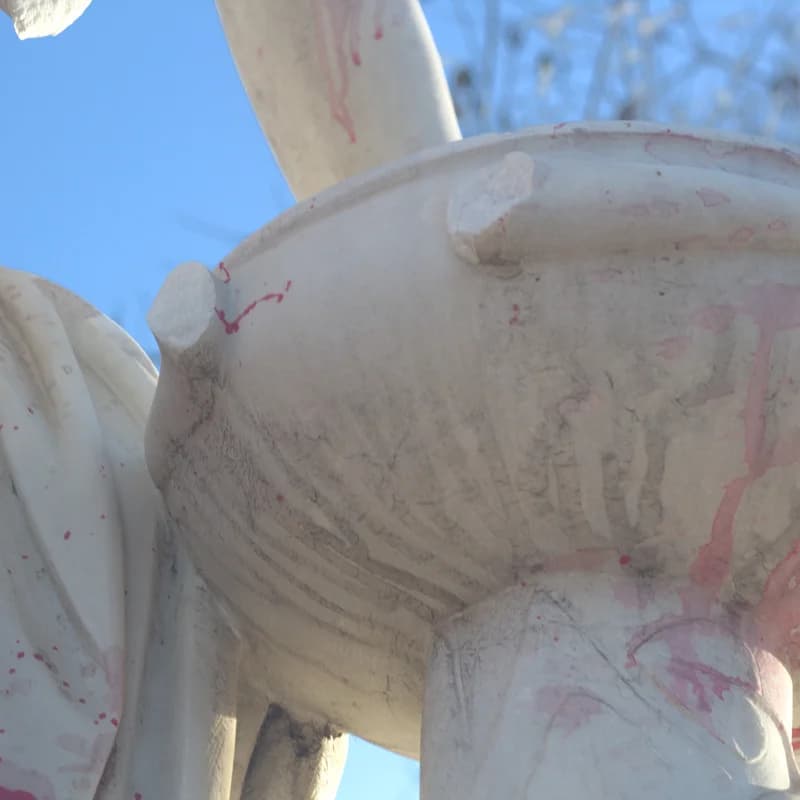
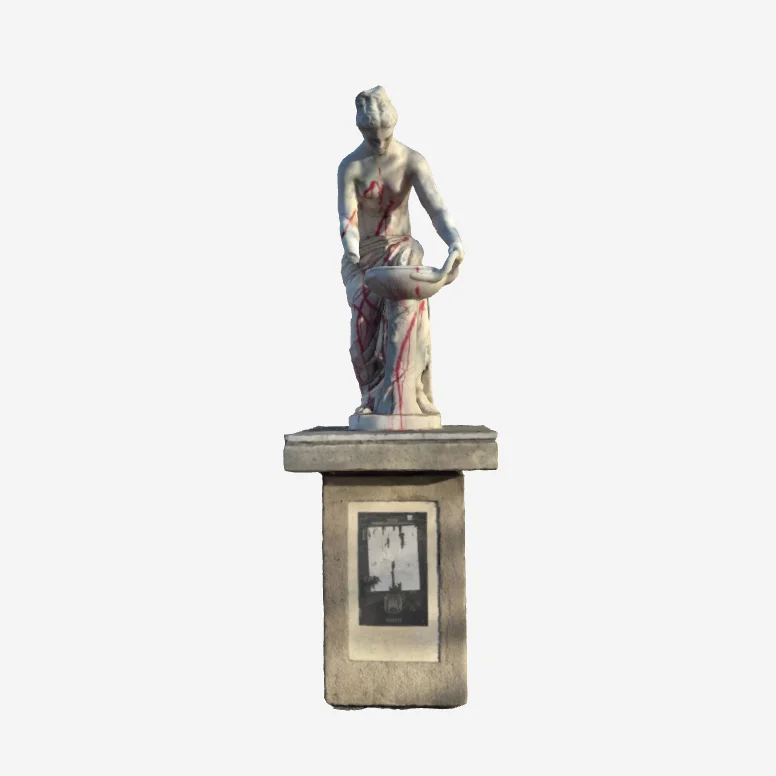
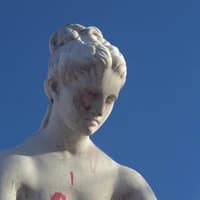
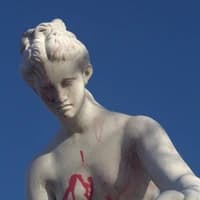
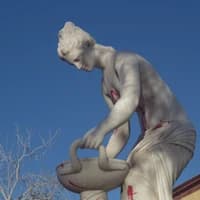
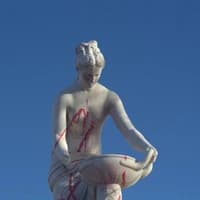
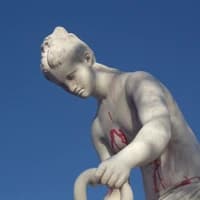
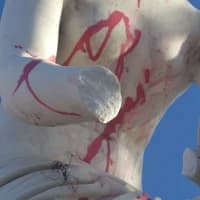
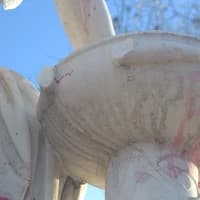
The 2000 record and the 2011 photographs show the sculpture with both arms and both handles of the basin. In August 2026 the right forearm and hand are missing and the handle on the same side is broken; the surface also showed splashes of red paint. The date and cause of the loss are not documented.
Work record
Technical Data
AUTHOR
Ancient model by an undocumented maker; La Serena copy attributed to Romanelli (Florence workshop), individual maker not identified
CHRONOLOGY
Modern copy of undocumented execution date, recorded as a twentieth-century work; model found at Palestrina in 1771
MATERIALITY
White marble
TECHNIQUE
Marble carving
MOVEMENT
Classical tradition (modern copy)
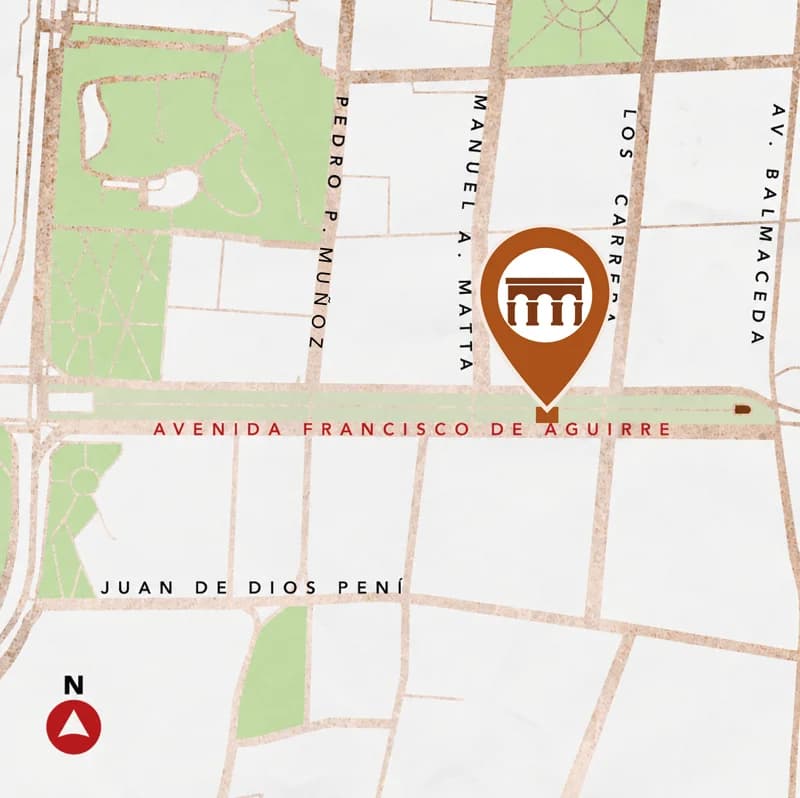
WORK DESCRIPTION
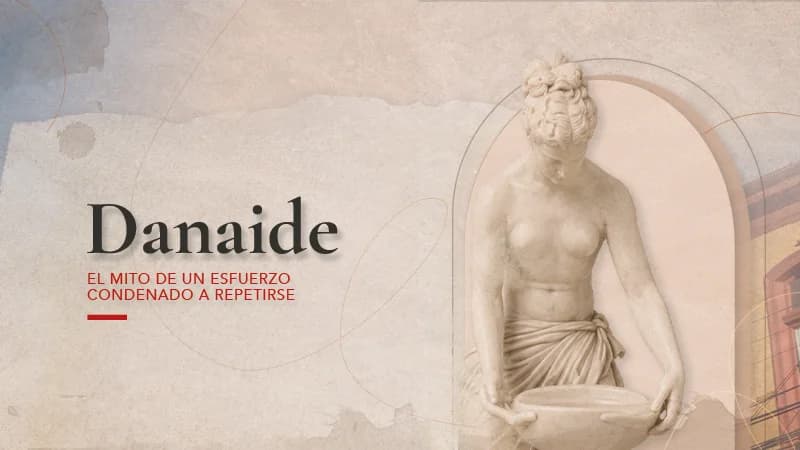
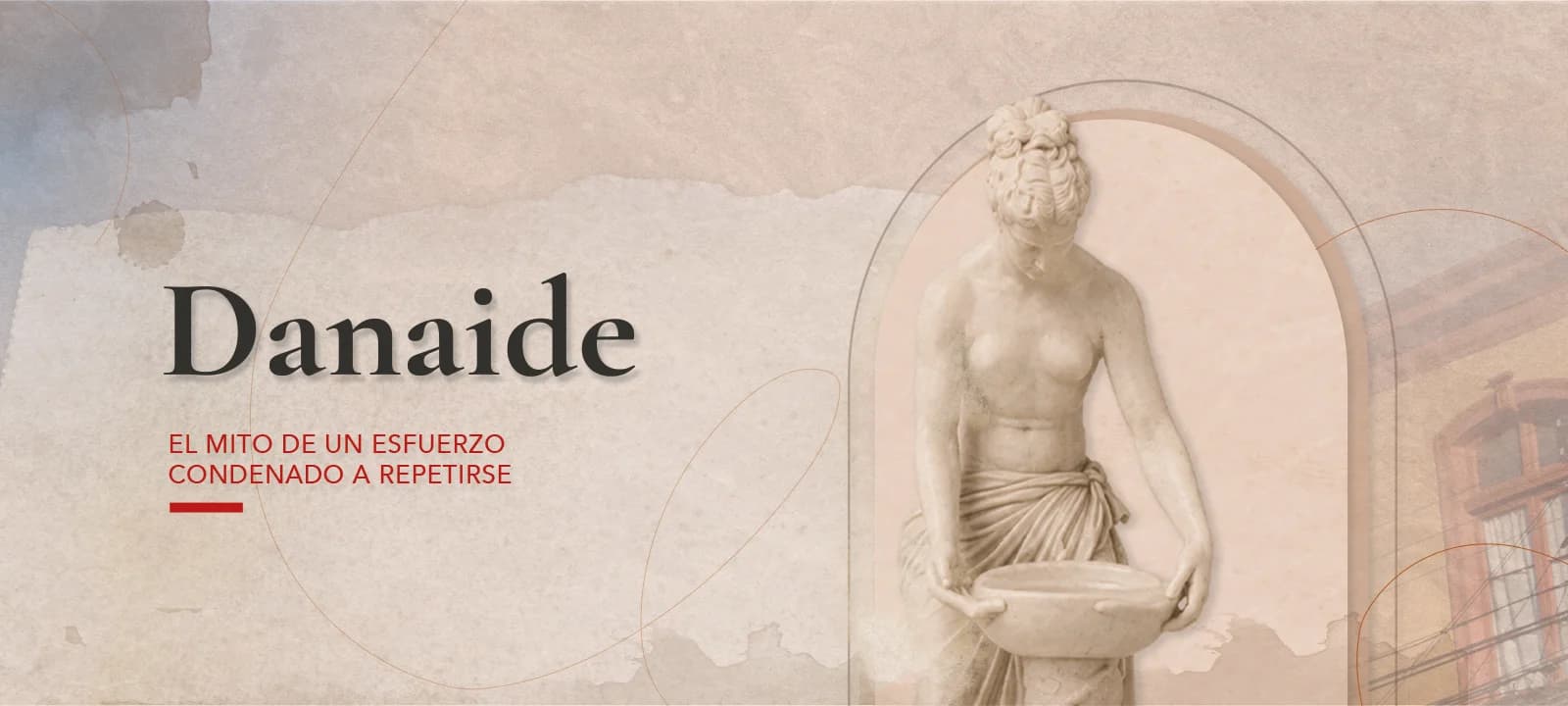
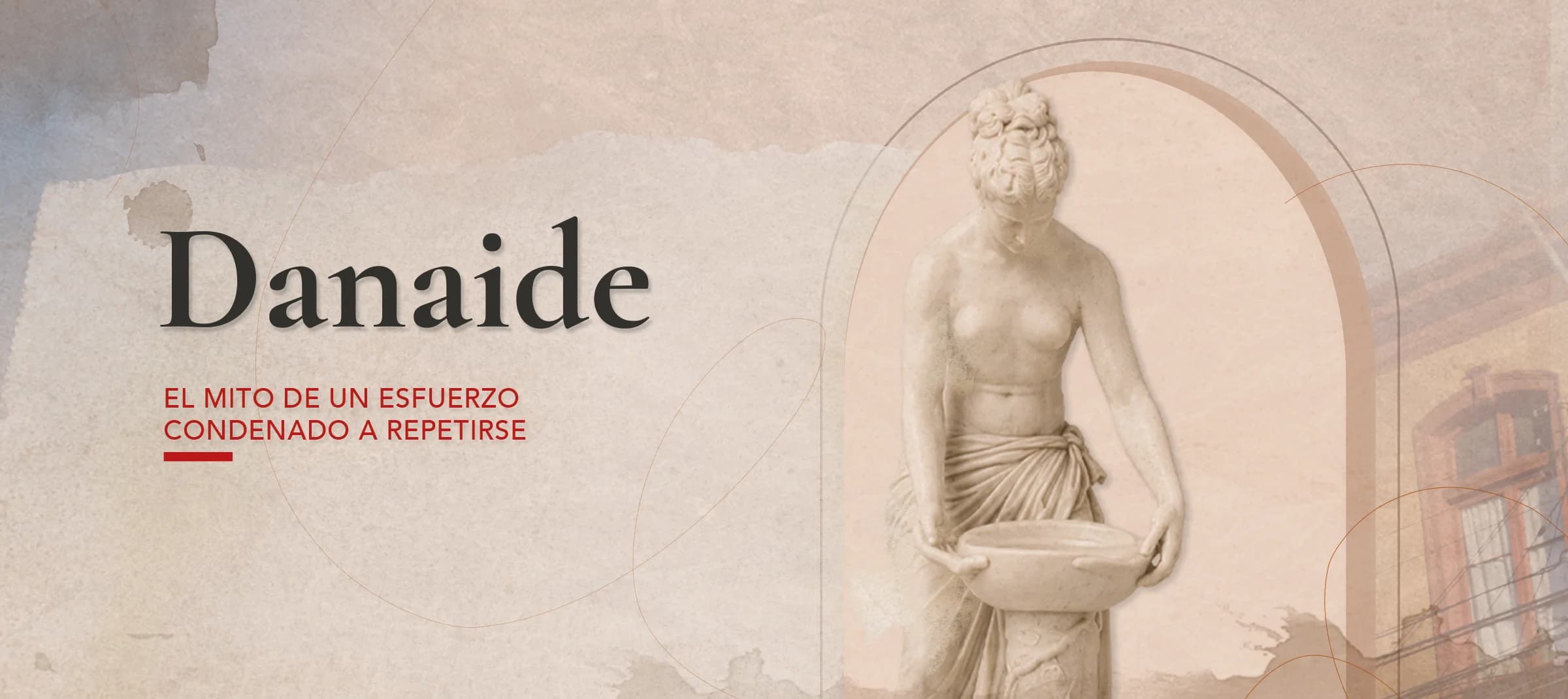
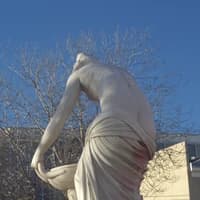
Standing female figure with the torso strongly bent forward and the head lowered. The wavy hair is gathered in a high bun. The torso is bare and a mantle wraps the hips and legs in deep folds that contrast with the continuous surface of the chest and back. The left arm descends towards the basin and the hand grips one of its handles; the right arm breaks off mid-forearm at a fracture, and the handle on that side is broken.
The basin, wide and shallow, has two loop-shaped handles and rests on a cylindrical support decorated with sinuous plant reliefs. The figure and the support stand on a single circular plinth.
General Gallery


